Peel Here to Win: The Gas Station Scratch Card and the Marketing That Trusted You With a Little Hope
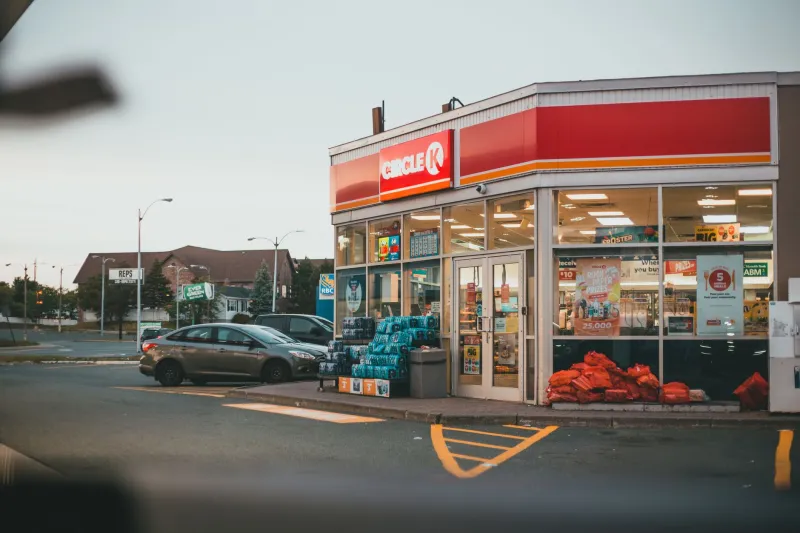
You pulled up to the pump, ran your card through the attendant's clicker or counted out cash at the window, and then — before you got back in the car — they handed you a small rectangle of cardboard. Maybe it had a silver strip across the middle. Maybe it had three boxes you scratched with a coin. Either way, you knew what to do.
You scratched it right there, standing next to the pump, engine still ticking.
Most of the time you won nothing. Occasionally you won a free soda or a car wash. Once in a great while, somebody at that very station won something worth talking about. But the point wasn't really the prize. The point was the moment — that two-second window after the coin cleared the foil when anything was still possible.
Gas station scratch cards were everywhere in the 1970s, '80s, and into the '90s. They were cheap to produce, easy to distribute, and remarkably effective at making people feel something about a commodity purchase that is, by any objective measure, one of the least exciting transactions in modern life. You have to buy gas. You have no emotional attachment to the brand. You'll drive across the street for two cents cheaper per gallon.
And yet, somehow, a piece of cardboard with a foil strip made you feel like a regular.
The Loyalty Economy Before Data Entered the Room
Customer loyalty programs have existed in various forms since the nineteenth century, when S&H Green Stamps let shoppers collect points redeemable for household goods. The gas industry picked up that thread enthusiastically in the postwar era, experimenting with glassware giveaways, dish sets, and promotional games throughout the 1950s and '60s. By the time the scratch card arrived as a format, stations had already established a culture of tangible reward — you showed up, you got something physical in return.
The scratch card fit that culture perfectly. It was immediate. It was tactile. It required no tracking, no account creation, no personal information. You didn't have to tell anyone your name or your email address or how many miles you drove per year. You just got a card, and the card either had something on it or it didn't.
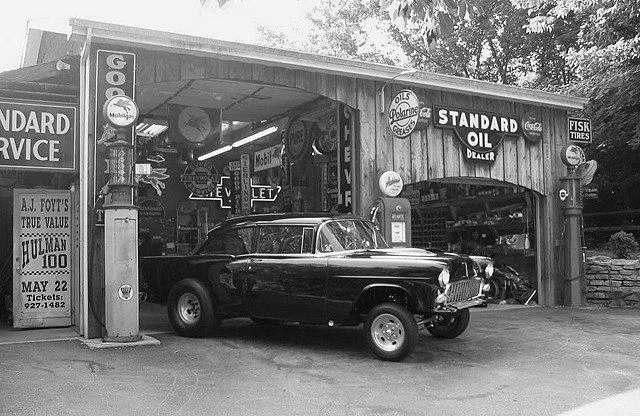
Chain stations — Shell, Texaco, Gulf, Mobil — ran elaborate promotional games with names and themes and weekly drawings. Some ran for months, with collectible game pieces that kept customers coming back to complete a set. The mechanics were borrowed from the carnival midway, and they worked for the same reason: people are drawn to games, to chance, to the possibility of winning something they didn't expect.
Punch cards filled in the gaps. Twelve fill-ups and the thirteenth was discounted. Simple, trackable without any technology beyond a small card in your glove compartment, and effective at building genuine habit. The psychology wasn't sophisticated, but it didn't need to be. It was honest about what it was: a small reward for showing up repeatedly.
The Invisible Hand That Replaced the Card
Today's gas station loyalty program is a fundamentally different creature.
The major chains — Shell Fuel Rewards, BP BPme, ExxonMobil Rewards+ — operate through smartphone apps that track your behavior in granular detail. Every fill-up is logged. The app knows what time you typically stop, how much you typically buy, whether you also shop in the convenience store, and what you buy when you do. That data is analyzed, combined with purchase history from partner retailers, and used to generate personalized offers designed to modify your behavior in specific ways.
This is not a scratch card. This is a behavioral prediction engine that happens to occasionally give you three cents off per gallon.
The efficiency gain is real. Digital programs can target offers far more precisely than a mass-distributed piece of cardboard. A customer who always buys a large coffee with their fill-up can be offered a coffee discount. A customer who fills up every Tuesday can be offered a Tuesday-specific promotion. The marketing dollar goes further because it's aimed more carefully.
But something substantial disappeared in the transition. The scratch card was public in a small, social way. You scratched it at the pump, and sometimes the person at the next pump glanced over. If you won something, you might mention it inside. It was a shared experience in miniature — a tiny piece of common luck distributed across a community of strangers who happened to need gas that day.
The app experience is entirely private. The offer you receive is yours alone, generated specifically for you based on data you probably didn't consciously agree to share. There's no moment of revelation, no coin on foil, no two-second window of possibility. There's a notification on your phone that says you've accumulated enough points for a discount, and you apply it at the pump without looking up.
Hope Versus Prediction
The deeper difference between then and now isn't really about cardboard versus software. It's about the relationship between the company and the customer.
The scratch card said: here's a chance at something. We don't know who's going to win, and neither do you. That uncertainty was the whole point. It treated customers as participants in a shared game, which created a feeling — however manufactured — of possibility.
The loyalty app says: we know what you want, we know when you want it, and we'll offer it to you at the moment we've calculated you're most likely to respond. That's not a game. That's a prediction. And being the subject of a prediction, however accurate, feels different from being a player in a game, however rigged.
Neither system is purely innocent. The scratch card was marketing. The app is marketing. Both exist to extract repeat purchases from people who would otherwise be indifferent to brand loyalty at the pump.
But one of them handed you a coin and let you find out for yourself. The other already knew what you were going to do before you pulled into the station.
The foil rectangle is gone. The data profile is permanent. And somewhere in that trade, a small, ordinary moment of hope quietly vanished from American daily life.