Read the Manual or Stay Confused: The Lost Era of Products That Made You Work for It
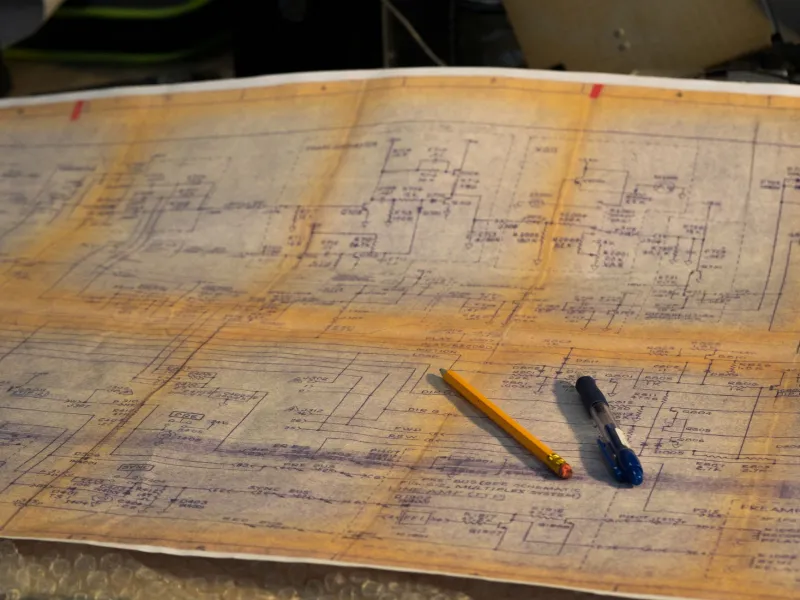
There's a binder in a lot of American garages — or there used to be. It held the manuals. The refrigerator manual. The lawnmower manual. The hi-fi receiver manual with the fold-out wiring diagram that covered half the kitchen table. Nobody put those manuals there because they enjoyed reading technical documentation. They put them there because if something went wrong with the thing, you were going to need them.
That binder represented a relationship with consumer products that has almost entirely vanished. It was a relationship built on the assumption that owning something obligated you to understand it — at least a little.
The Thick Book in the Box
If you bought a stereo receiver in 1974, you got a manual. Not a folded sheet with six icons and a QR code, but an actual manual — sometimes forty, sixty, eighty pages long. It explained impedance matching. It told you how to calculate the correct gauge of speaker wire for a given room size. It described what each dial actually did to the signal, not just what label was printed above it.
You could ignore all of that, of course. Plenty of people did. But the information was there, and the culture around consumer electronics in that era rewarded the people who engaged with it. There were magazines — Popular Electronics, Audio, Hi-Fi News — that assumed readers wanted to go deeper. There were hobbyist communities built around the shared project of genuinely mastering the devices in your home.
The same was true across categories. Home appliances came with installation instructions that expected you to know which wire was the ground. Cameras came with exposure guides that assumed you'd learn the relationship between aperture and shutter speed rather than letting the camera decide. Power tools came with adjustment diagrams. Even cars — before computer diagnostics made shade-tree mechanics increasingly obsolete — were sold with owner's manuals that included basic troubleshooting sections, on the assumption that you might actually use them.
The implicit contract between manufacturer and buyer was: we made a complicated thing, and we expect you to meet us partway.
The Design Revolution That Changed Everything
The shift started in the 1980s and accelerated dramatically with the personal computer wars of the 1990s. The problem was that computers were genuinely, catastrophically hard to use — and the companies that figured out how to make them easier started winning markets. Apple's entire early identity was built on the idea that technology should be intuitive. You shouldn't need to understand it. You should just be able to use it.
That philosophy was a genuine breakthrough, and it democratized access to technology in ways that mattered enormously. But it also started a race toward zero friction that eventually consumed the entire consumer products industry.
By the time the smartphone era arrived, the design goal had inverted completely. The old standard was: build a capable product and provide documentation. The new standard became: build a product so intuitive that documentation is unnecessary. If your user needs to read anything, you've already failed.
The result is devices that are genuinely remarkable to operate and genuinely opaque to understand. The iPhone is the most widely used computer in human history, and the overwhelming majority of its users have no meaningful idea how it works. That's not a criticism — it's a design achievement. But it's also a description of a relationship with technology that would have been unrecognizable to someone buying a ham radio kit in 1968.
The Knowledge That Disappeared
Here's the thing about learning curves: they produce knowledge. When you spent three evenings with a stereo manual figuring out why your left channel sounded muddy, you came out the other side knowing something. You understood the signal path. You could diagnose future problems. You had a mental model of the object sitting in your living room.
That kind of knowledge — earned through friction — turned out to be surprisingly durable and surprisingly transferable. People who grew up wrestling with complicated consumer products developed a general comfort with mechanical and electrical systems that made them better at troubleshooting other things, at improvising, at understanding the difference between a symptom and a cause.
The generation that grew up reading manuals produced a remarkable density of people who could fix things, modify things, build things from scratch. Not because they were smarter, but because the products they owned demanded engagement, and engagement built competence.
Modern products, by design, demand almost nothing. And the competence that friction used to build has quietly eroded. Studies on basic mechanical literacy among younger Americans consistently show declining ability to perform tasks that were considered routine home maintenance a generation ago. That's not laziness — it's a predictable outcome of a world in which products are designed to be used, not understood.
The Tutorial That Does It For You
The modern substitute for the manual is the tutorial — usually a two-minute video that walks you through a specific task without explaining the underlying logic. Tutorials are extraordinarily effective at getting someone from zero to functional in the shortest possible time. They are almost completely useless at building transferable understanding.
When you watch someone else do a thing and then replicate the exact steps, you can perform that task. When the situation changes slightly — when the interface updates, when something goes wrong at step four — you have nothing to fall back on because you never understood why the steps worked in the first place. You followed a path without reading the map.
This is the hidden cost of optimizing for immediate usability: you trade depth of understanding for speed of adoption, and most of the time, for most purposes, that trade is worth making. But it accumulates. A society in which nobody understands how their devices work is a society that is entirely dependent on the companies that make those devices to keep them running — and to tell them when they need replacing.
The Binder in the Garage
There are still people who read manuals. They tend to be the same people who repair things rather than replace them, who can explain what their tools are actually doing, who reach for a schematic before they reach for customer support. They're not a majority. They may be a shrinking minority.
But there's a growing counter-movement — in maker spaces, in repair cafes, in the right-to-repair advocacy that's pushing back against products engineered to be unfixable. It's a recognition that something was lost when we decided that understanding your own possessions was an optional hobby rather than a basic expectation.
The manual didn't just explain the product. It told you that you were capable of understanding it. That assumption, quietly dropped somewhere in the last forty years, turns out to have mattered more than anyone realized at the time.