The World Could Wait Until Friday: How Americans Once Lived Comfortably Inside a News Delay
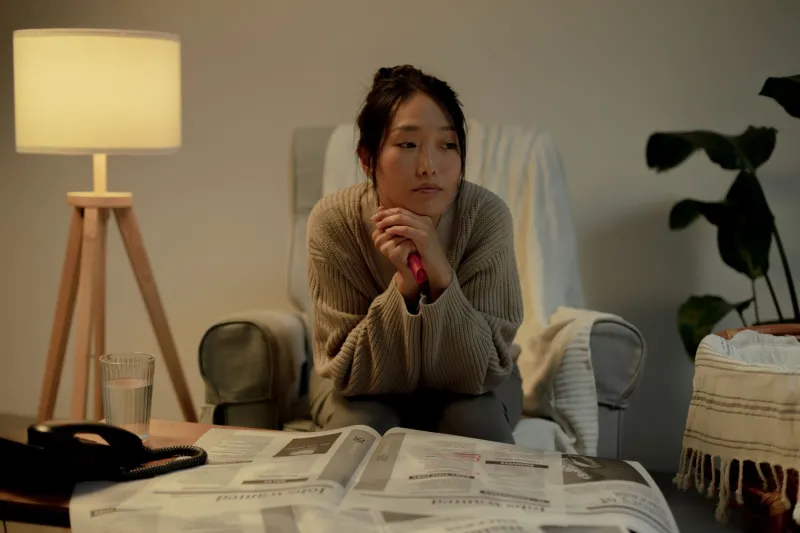
Imagine a Tuesday in 1952. Something significant has just happened in Korea — a diplomatic development, a military engagement, a shift in the front lines. The soldiers involved know. The generals know. The wire services have picked it up. But in a suburb of Columbus, Ohio, a family eating dinner that Tuesday night has no idea. They won't hear about it until tomorrow morning's newspaper, and even then the account will be brief, filtered through a correspondent who filed the story twenty-four hours earlier.
If they want the full picture — the context, the analysis, the photographs — they'll wait for the weekend. Time magazine arrives Saturday. Life comes Monday. By then, the event is nearly a week old, and the world has moved on to something else.
This was not considered a problem. This was just Tuesday.
The Architecture of Slow News
For most of the twentieth century, the American news ecosystem was built around delay as a structural feature, not a bug. Daily newspapers covered domestic news with reasonable speed, but international events traveled through a long chain before reaching anyone's breakfast table.
Foreign correspondents filed dispatches by cable or telex from overseas bureaus. Editors shaped those dispatches into stories. Typesetters laid them out. Presses ran overnight. Trucks delivered bundles before dawn. By the time a reader in Des Moines held the paper, the events described were already at least twelve hours old — and for events in Asia or Europe, often much longer.
Radio shortened the gap somewhat. Edward R. Murrow broadcasting from London during the Blitz brought the war into American living rooms with a sense of immediacy that newspapers couldn't match. But even radio was curated, scheduled, and filtered through a small number of authoritative voices. You heard the news at six and again at ten. Between those moments, the world was largely silent.
Weekly magazines — Time, Newsweek, U.S. News & World Report — served a different function altogether. They weren't trying to break news. They were trying to make sense of it. By the time an issue reached readers, the events it covered had already been processed, contextualized, and placed into a narrative. You weren't getting raw information; you were getting a curated interpretation.
This was, in its way, a form of built-in editorial wisdom.
What the Delay Actually Did to People
Here's the thing that's easy to miss from the vantage point of the present: the delay didn't make Americans less engaged with global affairs. In many cases, it made them more thoughtful about it.
When information arrived slowly, people had time to form opinions before the next wave hit. A family that read about a foreign policy development on Wednesday had until Saturday's magazine to think it over before encountering the analysis. There was breathing room in the news cycle — space between stimulus and response that today has essentially collapsed to zero.
There was also a natural triage happening. Not everything that happened overseas made it into the American press. Editors made decisions about what mattered to their readers, and those decisions — however imperfect, however shaped by bias and geopolitical interest — meant that the average American wasn't expected to have an informed opinion about every development in every corner of the world simultaneously.
That expectation, which the internet has quietly installed in all of us, is relatively new. And it is genuinely exhausting.
The Acceleration and Its Discontents
The shift didn't happen overnight. Cable news in the 1980s started stretching the news day from thirty minutes to twenty-four hours — a change that seemed remarkable at the time and looks quaint now. The internet dissolved the remaining boundaries. By the mid-2000s, major international events were being reported in real time, with amateur witnesses uploading footage before professional journalists had landed at the airport.
Today, the gap between event and awareness is measured in seconds. A protest in a city most Americans couldn't locate on a map trends on social media before the local authorities have issued a statement. A diplomatic incident in Southeast Asia is the subject of hot takes before the diplomats have left the room.
This is, in some ways, genuinely extraordinary. The Arab Spring demonstrated that real-time information could have real political consequences. The rapid spread of footage documenting police violence in America accelerated a national reckoning that might have taken decades under the old news model. Speed, in these cases, served justice.
But the same infrastructure that delivered those moments also delivers an unrelenting stream of conflict, catastrophe, and crisis — much of it happening far away, most of it requiring no action from the person consuming it, all of it arriving at the same emotional intensity as something that directly affects their lives.
Psychologists have a term for the fatigue this produces: headline stress disorder. It's not in the DSM, but therapists report it constantly. Patients who feel overwhelmed, anxious, and helpless — not because of anything in their immediate lives, but because the world's suffering arrives in their pocket, in real time, without pause.
The Comfort of Not Knowing Yet
The family in Columbus in 1952 wasn't uninformed. They read their paper, they listened to the radio, they subscribed to Life magazine. They were engaged citizens in a functioning democracy. But they were also protected, in a quiet and largely unacknowledged way, by the limits of the technology around them.
The news came when it came. The world waited until Friday. And in that waiting, there was something that looks, from this distance, a lot like peace.
None of this is an argument for ignorance or for turning the clock back to a time when the press corps was smaller, whiter, and significantly less accountable. The real-time news era has created genuine accountability and genuine connection. But it has also created a kind of ambient dread that the mid-century American living on a news delay simply didn't carry.
They knew less about what was happening overseas on any given Tuesday. They probably slept better for it.
Whether we'd trade what we know now for what they felt then is a question worth sitting with — maybe for a few days before you answer.