The Bowling League That Built Your Social Life: What We Traded Away When Community Stopped Being Local
In 1962, a young steelworker named Frank Kowalski moved from Pittsburgh to Cleveland for a job at a manufacturing plant. He didn't know a single person in the city. Within six months, he had a bowling team, a church pew with his name on it in the informal sense, a union buddy who'd become a lifelong friend, and a neighbor who watched his kids when his wife went into labor with their second child.
Frank didn't do anything remarkable to build that life. He just showed up to the places that were waiting for him.
Today, a young professional moving to a new city — let's call her Maya — arrives with a smartphone full of contacts, a LinkedIn profile, and access to every social platform ever invented. She might know hundreds of people across the country in the loose, digital sense of the word. Six months in, she eats dinner alone most nights.
Maya is not unusual. She is, increasingly, the norm.
The Infrastructure That Nobody Called Infrastructure
The social scaffolding that caught Frank Kowalski wasn't accidental. Mid-century America was dense with overlapping civic institutions that existed, in part, to absorb newcomers. Bowling leagues. Union halls. Veterans' organizations like the VFW and American Legion. Fraternal orders. Church groups that organized everything from potlucks to softball teams. Block associations where neighbors actually knew each other by name, not just by the color of their mailbox.
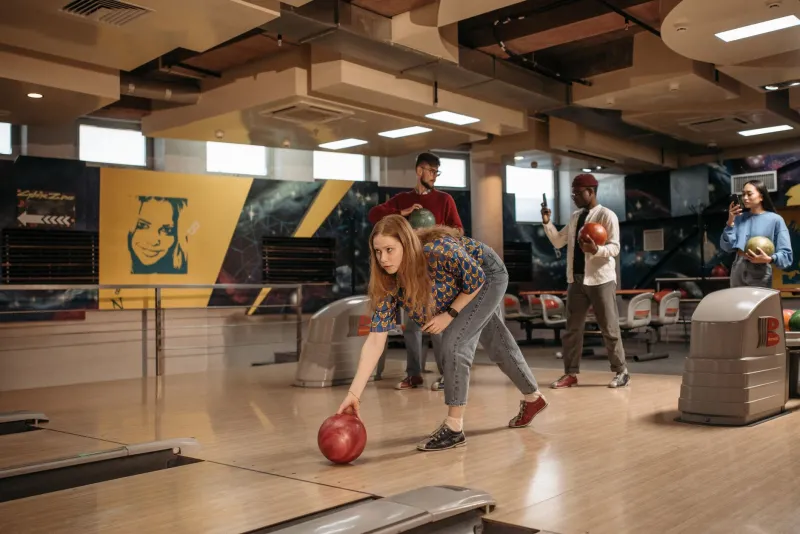
These weren't just clubs. They were the connective tissue of American social life. They provided repeated exposure — the single most reliable mechanism for turning a stranger into a friend — without requiring any particular charisma or social initiative. You showed up on Tuesday night because that was bowling night. The relationship built itself around the repetition.
Sociologists call this kind of contact "third place" community — somewhere that's neither home nor work, where people gather with low stakes and consistent frequency. Robert Putnam, in his landmark 2000 book Bowling Alone, documented the collapse of these institutions across the second half of the twentieth century with almost surgical precision. Bowling league membership, to use his most famous example, declined by roughly 40 percent between 1980 and 1993 — even as the total number of people bowling actually increased. Americans were still bowling. They just weren't doing it together.
When Moving Meant Disappearing
There was a particular quality to the social experience of relocating in earlier decades that gets overlooked in nostalgia for community: it was often uncomfortable and even lonely at first, but the discomfort had a resolution built into it. The structures were there. You just had to walk through the door.
Church membership, for example, operated as a kind of social passport in mid-century America. You moved to a new town, you found a congregation that fit, and within weeks you had a ready-made network of people who were culturally obligated to welcome you. It didn't matter if you were shy or socially awkward or new to the city. The institution did the heavy lifting.
Union halls served a similar function for working-class men. If you had a union card, you had a built-in community of people who shared your economic interests and your daily reality. The hall was a place to go. There was always someone there.
Neighborhood itself functioned differently. Front porches weren't architectural nostalgia — they were social technology. You sat on the porch because the house was hot and there was no air conditioning, and while you sat there, you talked to whoever walked by. Proximity generated conversation. Conversation generated familiarity. Familiarity, over time, generated trust.
What Replaced the Bowling League
The honest answer is: nothing, really. Or rather, something that looks like a replacement but functions very differently.
Social media arrived promising connection at scale. And in a narrow technical sense, it delivered. You can maintain awareness of hundreds of people simultaneously — their birthdays, their career changes, their vacation photos, their opinions about everything. The quantity of social information available to the average American today would have been staggering to someone living in 1965.
But awareness isn't intimacy. Knowing that your college roommate just got promoted is not the same as having someone to call at 11 p.m. when things go wrong. A Facebook friend is not the same as a neighbor who notices when your lights haven't been on in three days.
The surgeon general's 2023 advisory on loneliness — a document that used the word "epidemic" without qualification — reported that roughly half of American adults report measurable levels of loneliness. The health consequences, the report noted, are comparable to smoking fifteen cigarettes a day. We are, by measurable clinical standards, one of the most socially isolated wealthy societies in human history.
The Loneliness Nobody Planned For
None of this was designed. Nobody sat in a room and decided to dismantle the bowling league and replace it with Instagram. It happened through a thousand individual decisions that each made rational sense in isolation: move to where the job is, work longer hours, drive instead of walk, buy a bigger house farther from the center of things, stay home because the couch is comfortable and the streaming queue is infinite.
The suburb, the car, the air conditioner, the television, the smartphone — each of these innovations offered genuine comfort and convenience, and each of them, at the margin, made it slightly easier to be alone. Stacked across seventy years, the cumulative effect is a society that has optimized for privacy and autonomy at the direct expense of the accidental contact that used to build community.
Frank Kowalski's Cleveland isn't coming back. The plant closed decades ago. The union hall is a parking lot. The church still stands, but the Tuesday bowling team folded sometime in the 1990s.
Maya is looking for her people. She has every tool ever invented to find them. She's still eating dinner alone.
The gap between those two sentences is one of the defining distances of modern American life — and we still haven't figured out how to cross it.