Trust Me, I'm the Doctor: The Quiet Confidence We Had Before We Started Diagnosing Ourselves
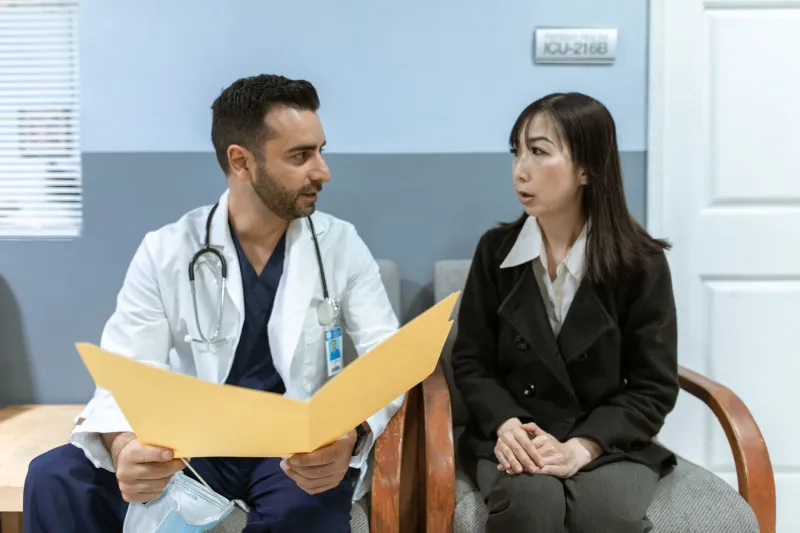
Sometime in the mid-1950s, if you woke up with a persistent cough and a low-grade fever, you did one thing: you called the doctor. He came to your house — or you went to his office — sat across from him in a wooden chair, and listened. He told you what was wrong. You went home, followed his instructions, and got better. Or you didn't. Either way, the mystery largely stayed with him.
That was the deal. And for most Americans, it felt completely natural.
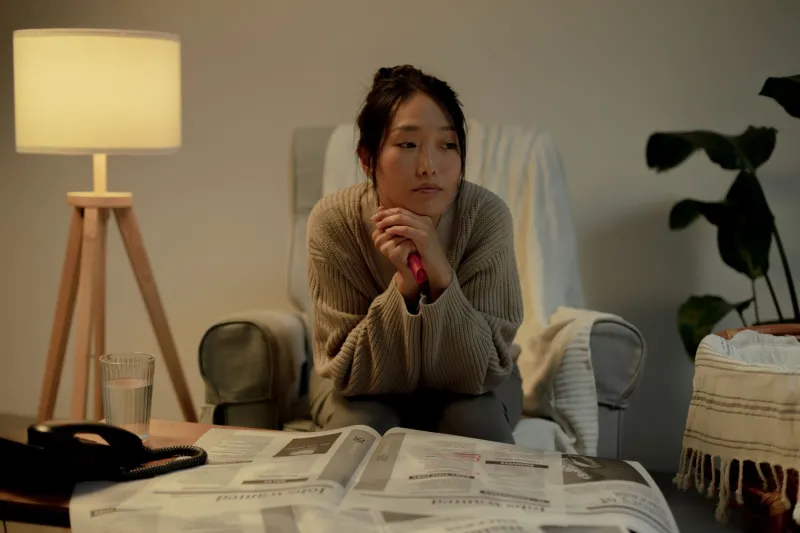
Today, that same scenario looks radically different. You wake up with the cough, reach for your phone before your feet hit the floor, and within four minutes you've convinced yourself it's either a sinus infection, walking pneumonia, or — on a bad night — something far worse. By the time you actually see a doctor, you've already run through three possible treatment plans and bookmarked a Reddit thread written by someone in Ohio who had the exact same symptom in 2019.
We didn't just change how we access medical information. We changed our entire relationship with uncertainty.
When the Doctor Was the Final Word
For most of the twentieth century, medicine operated on a model of near-complete informational asymmetry. Physicians spent years accumulating knowledge that patients simply didn't have access to. Medical textbooks weren't in public libraries. Drug interactions weren't searchable. The biological mechanisms behind a diagnosis were, for most ordinary Americans, completely opaque.
And that was fine. More than fine, actually — it was reassuring.
The family doctor wasn't just a clinician. He was a trusted figure in the community, often someone who had delivered babies, treated grandparents, and knew your family history without consulting a file. His authority came not just from his degree but from a kind of accumulated, personal familiarity. When he said you had bronchitis and prescribed bed rest, that was the end of the conversation. You didn't go home and verify it.
This wasn't naivety. It was a functional social contract. Patients trusted doctors; doctors carried the weight of that trust. The system had real flaws — women's symptoms were frequently dismissed, Black Americans faced outright discrimination in care, and plenty of diagnoses were simply wrong — but the psychological dynamic was one of deference and, importantly, calm.
The Information Flood That Changed Everything
The internet didn't just give Americans access to medical information. It gave them all of it, instantly, without context, and with no filter for accuracy.
WebMD launched in 1996. By the early 2000s, patients were arriving at appointments with printouts. Doctors started using the phrase "cyberchondria" — health anxiety amplified by online searching — with genuine clinical concern. Studies began showing that symptom-checking tools were more likely to suggest serious conditions than minor ones, because the algorithms were optimized for caution, not calm.
By the 2010s, the dynamic had fully inverted. A Pew Research study found that 72 percent of American internet users had searched for health information online in the previous year. Many of them had already formed opinions about their diagnosis before speaking to a professional. Some came prepared to argue.
This wasn't entirely irrational. The same era that brought WebMD also brought genuine medical scandals — opioid overprescription, pharmaceutical marketing dressed up as science, high-profile cases of misdiagnosis. Americans had real reasons to be skeptical. The problem was that skepticism and anxiety arrived together, and it became hard to tell them apart.
The New Patient: Informed, Anxious, and Exhausted
Here's the paradox at the center of modern American health culture: we have more medical information available than any generation in history, and we are, by many measures, more anxious about our health than ever before.
Health anxiety — sometimes called illness anxiety disorder — has climbed steadily over the past two decades. Telehealth platforms, symptom-checker apps, and AI-powered diagnostic tools have made the feedback loop faster and tighter. You feel something unusual, you search it, the results are alarming, you feel worse, you search again.
The old model had a built-in circuit breaker: the appointment. You had to wait, which meant you had time to calm down, and you had a human being at the end of it who could read your face and your history, not just your symptoms. Today, the circuit breaker is gone. The loop runs continuously.
Doctors, for their part, are navigating a genuinely complicated new reality. Many welcome informed patients — it can make conversations more efficient and lead to better outcomes. But there's also a growing frustration with misinformation dressed up as research, and with the sheer volume of pre-formed conclusions they're expected to diplomatically dismantle in a fifteen-minute appointment.
What We Traded, and What We Got
It would be easy to romanticize the old model. But it had serious problems. Blind trust in physicians enabled paternalism, suppressed legitimate questions, and left patients — particularly women and minorities — without the tools to advocate for themselves. The shift toward patient empowerment has saved lives. Catching rare conditions early, asking about drug interactions, seeking second opinions — these are real, meaningful gains.
But something quieter was also lost. The old American relationship with medical uncertainty had a kind of grace to it. You didn't know everything that could go wrong with your body, and because you didn't know, you weren't constantly braced for it. Ignorance, in this narrow sense, was genuinely protective.
Now we live in the opposite condition: knowing too much, understanding too little, and carrying the psychological weight of every worst-case scenario that a search engine is willing to surface at two in the morning.
The epoch has drifted far from the wooden chair in the doctor's office. Whether we're healthier for the journey — or just better informed and more afraid — is a question we're still working out.