The Corner Banker Who Knew Your Business Before You Did: How America's Entrepreneurs Got Their Start on a Smile and a Handshake

The Corner Banker Who Knew Your Business Before You Did: How America's Entrepreneurs Got Their Start on a Smile and a Handshake
Walk into any bank today with a business idea, and you'll face a gauntlet of forms, credit checks, financial projections, and waiting periods that can stretch for months. But for most of the 20th century, starting a business in America often began with a conversation across a wooden desk with someone who already knew whether you paid your bills on time.
When Character Was Currency
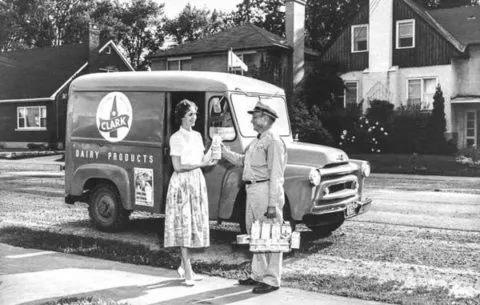
In 1955, if Joe wanted to open a hardware store on Main Street, he didn't need a 40-page business plan or three years of tax returns. He walked into First National Bank, sat down with Mr. Henderson—who had handled his family's accounts for decades—and explained his vision. Henderson knew Joe had worked at the railroad for fifteen years without missing a day. He knew Joe's father had run a successful grain elevator until his retirement. Most importantly, he knew Joe's word was good.
 Photo: Main Street, via www.meme-arsenal.com
 Photo: First National Bank, via www.talkingmats.com
The loan might be approved before Joe left the building.
This wasn't reckless lending—it was relationship lending. Local bankers lived in the same communities as their borrowers. They attended the same churches, sent their kids to the same schools, and shopped at the businesses they financed. A bad loan didn't just hurt the bank's balance sheet; it affected the banker's reputation at the Rotary Club.
 Photo: Rotary Club, via ectomorphing.com
The Network That Built Main Street
Beyond banks, mid-century America had an intricate web of informal financing that modern entrepreneurs can barely imagine. Fraternal organizations like the Elks or Moose Lodge often maintained informal investment pools. A promising member with a solid business idea could tap into collective resources that might otherwise sit idle in savings accounts.
Immigrant communities created rotating credit associations—systems where members contributed monthly to a pot that each person could access in turn. Chinese-American entrepreneurs used these "hui" systems to open restaurants and laundries. Mexican-American families organized "tandas" that funded everything from corner groceries to auto repair shops.
Even churches played a role. A congregation member with entrepreneurial ambitions might find silent partners among fellow parishioners who believed in both the business and the person behind it.
Speed vs. Scrutiny
The contrast with today's process is striking. Modern small business lending involves credit algorithms that can process applications in minutes—but those same algorithms might reject someone based on a medical bankruptcy from five years ago, regardless of their current circumstances or character.
A 2023 Federal Reserve study found that the average small business loan application takes 23 days to process, assuming approval. Many entrepreneurs spend weeks assembling documentation before they even apply. The SBA's most popular loan program requires personal guarantees, detailed financial statements, and proof of industry experience.
Yet for all this scrutiny, modern default rates aren't dramatically better than the handshake era. Community banks in the 1950s and 1960s typically saw small business loan default rates between 2-4%—comparable to today's rates despite far less paperwork.
What We Gained and Lost
Today's lending system offers undeniable advantages. Anti-discrimination laws mean that qualified borrowers can't be rejected based on race, gender, or religion—biases that absolutely existed in the handshake era. Online platforms and fintech companies have democratized access to capital, allowing entrepreneurs in small towns to access funding sources their grandparents never could have imagined.
Modern business owners can shop for the best rates across dozens of lenders simultaneously. They can access specialized funding for everything from inventory purchases to equipment leasing. Women and minority entrepreneurs, often excluded from old-boy networks, now have legal protections and targeted programs designed to level the playing field.
The Human Cost of Efficiency
But something was lost when banking became a numbers game. The local banker who approved loans based on character also served as an informal business advisor. He might suggest a different location, recommend a reliable supplier, or introduce the new business owner to potential customers.
When Joe's hardware store hit a rough patch during a recession, Mr. Henderson might restructure the loan terms or even advance additional funds to help weather the storm. He had a vested interest in Joe's success because Joe's failure would hurt the entire community.
Today's algorithmic lending offers efficiency but little flexibility. A struggling business owner faces automated payment systems and call center representatives who may not even be in the same state, let alone the same community.
The Network Effect
Perhaps most importantly, the handshake era created dense networks of mutual obligation that strengthened entire communities. When the banker, the entrepreneur, and the customers all lived in the same neighborhood, everyone had skin in the game. Success was shared, and failure was everyone's concern.
Modern entrepreneurs often work in isolation, connected to distant investors and online communities but disconnected from the place where their business actually operates. The corner coffee shop owner today might get funding from a fintech app but lose the informal mentorship and community integration that once came with local financing.
Looking Forward
As America grapples with the decline of small-town Main Streets and the concentration of economic power in major metropolitan areas, it's worth remembering that business financing was once deeply local and intensely personal. While we can't—and shouldn't—return to an era of exclusionary lending practices, we might ask whether our pursuit of efficiency has cost us something essential about how communities support entrepreneurship.
The handshake loan built more than businesses; it built relationships that strengthened the social fabric of American communities. In our rush to eliminate bias and increase efficiency, we may have eliminated something else: the human connections that once made starting a business feel like joining a community rather than navigating a system.