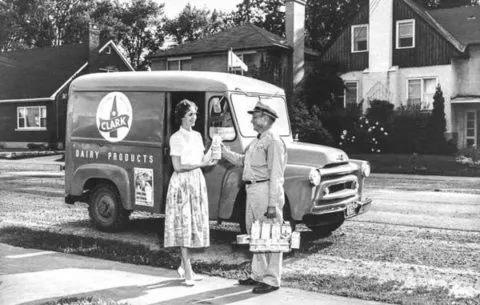
Borrowed Against the Sky: How American Farmers Ran on Faith Before Finance
Somewhere around February, when the ground was still frozen and the seed catalogs had just arrived, an American farmer would do something that sounds almost unthinkable today. He'd drive into town, walk into the local feed and supply store, and ask to put several hundred dollars' worth of seed, fertilizer, and equipment on account — with no collateral, no credit score, and no paperwork beyond a handwritten ledger entry. The store owner would look him over, maybe ask how last year's corn came in, and nod. That was the deal.
This was agricultural credit in rural America for most of the nineteenth and early twentieth centuries, and it worked — imperfectly, intimately, and entirely on the basis of who you were and whether your word meant anything in a ten-mile radius.
The Feed Store as First Bank
For generations of small-scale American farmers, the local feed and supply merchant wasn't just a vendor. He was a de facto lender, financial advisor, and community risk assessor all rolled into one. The system operated on what historians sometimes call "crop lien" arrangements — informal agreements where a farmer essentially pledged a portion of the coming harvest against the supplies he needed to plant it.
There were no interest rate disclosures. No loan officers with checklists. The calculus was simpler and far more personal: Does this man work his land hard? Does his family have a history of settling debts? Did his father pay back what he owed after the bad drought of 1912? These were the questions that determined whether a farmer walked out with what he needed or drove home empty-handed.
In the South, this system took on especially high stakes. Sharecroppers and tenant farmers were almost entirely dependent on local merchant credit, often trapped in cycles of debt that stretched across years. The same intimacy that made the system functional for established landowners made it exploitative for those without land, name recognition, or generational goodwill to draw on. Trust, it turned out, wasn't equally distributed.
The Rhythm of Seasonal Money
What made farm lending fundamentally different from any other kind of credit was its complete submission to the agricultural calendar. Money didn't flow on monthly schedules or quarterly reports. It moved with the seasons.
You borrowed in spring. You sweated through summer. You paid — or tried to — in fall, after the harvest came in and the grain elevator settled up. If the crop was good, the ledger got cleared and you started fresh. If drought or disease or a collapsed commodity price wiped out your yield, you had a conversation. Sometimes the merchant extended you another season. Sometimes he didn't.
County banks operated on similar logic. A local banker who'd grown up farming himself understood intuitively that a farmer asking for an extension in October wasn't a bad risk — he was a man whose corn came in light. That contextual understanding was baked into every transaction. It wasn't charity. It was applied knowledge of how farming actually worked.
When Washington Arrived in the Fields
The Great Depression changed everything. When farm prices collapsed in the early 1930s and banks began failing across the rural Midwest, the informal network of merchant credit and handshake loans simply couldn't hold. Farms went under by the thousands. The human infrastructure of local agricultural finance — built over a century of seasonal trust — buckled under economic forces too large for any feed store owner to absorb.
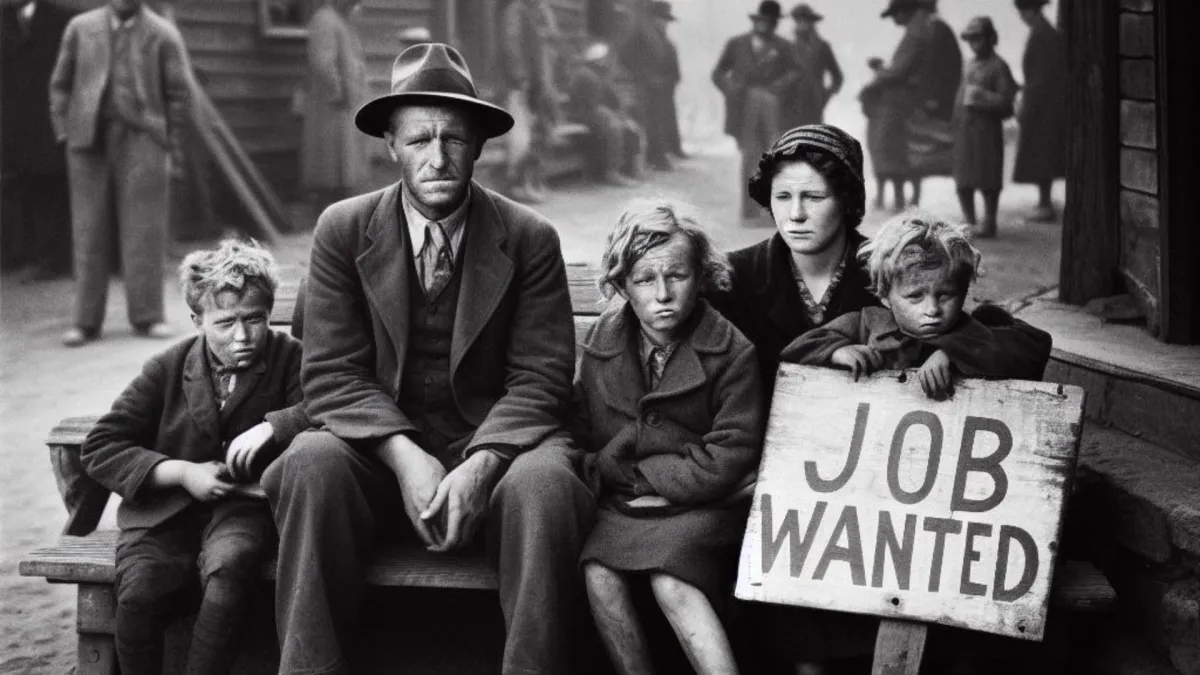 Photo: Great Depression, via www.shortform.com
The federal government's response reshaped rural lending permanently. The Farm Credit Administration, established in 1933, began offering structured loans through a network of regional banks specifically chartered to serve agriculture. The Agricultural Adjustment Act introduced price supports. Crop insurance programs, though modest at first, slowly replaced the pure weather gamble that had always underpinned spring borrowing.
 Photo: Farm Credit Administration, via farmcredit.com
By the postwar decades, a farmer applying for an operating loan was filling out forms, submitting soil surveys, and dealing with institutions headquartered in cities he'd never visited. The feed store owner still existed, but his role as informal banker had quietly been absorbed by systems designed in Washington.
What the Numbers Don't Capture
The modernization of agricultural finance brought genuine benefits. Access to capital expanded. Farmers could plan across longer horizons. Federal programs cushioned the worst blows of bad harvests and price crashes. The sheer volatility of the old system — where a single dry summer could end a family's farming life forever — was meaningfully reduced.
But something else disappeared with it. The merchant who extended credit wasn't just managing risk. He was embedded in the community in a way that made his decisions inseparable from his relationships. When he chose to carry a struggling farmer through another season, he was making a judgment that no algorithm could replicate — one built on years of watching that family work, knowing their character, understanding their circumstances.
Today's agricultural lending runs on USDA programs, commodity futures hedging, and credit scores calculated by machines that have never seen a cornfield. Crop insurance is a $10 billion federal program. The operating loans that once required a good name in town now require a business plan, a balance sheet, and often a lawyer.
The Drift Between Then and Now
It's tempting to romanticize the old way — the handshake, the seasonal rhythm, the merchant who knew your grandfather. And it's worth remembering that for many farmers, especially those without land or the right last name, the old system was less a safety net than a trap.
But there's something worth sitting with in the contrast. A system that ran on personal reputation and seasonal trust was, at its best, one that treated farmers as whole people rather than credit profiles. The feed store owner lending against next fall's harvest was making a bet on a human being — on their skill, their character, their history.
We've traded that intimacy for stability and scale. For most farmers, that's probably the right trade. But the drift from borrowed-against-the-sky faith to digital commodity dashboards is one of the quieter transformations in American economic life — and the distance between those two worlds is longer than it looks.