When Your Word Was Your Bond: How America Learned to Stop Trusting and Start Lawyering
When Your Word Was Your Bond: How America Learned to Stop Trusting and Start Lawyering
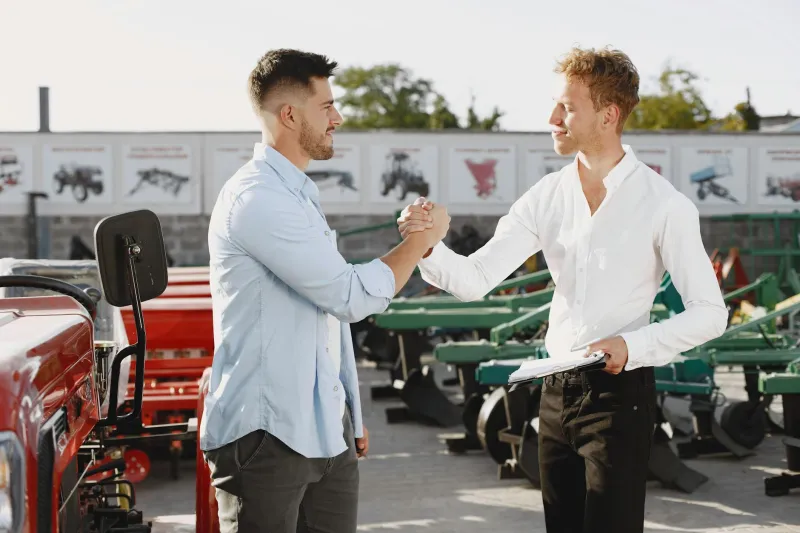
Walk into any small-town diner in 1955, and you might witness something that would seem almost magical today: two farmers agreeing to a thousand-dollar cattle deal with nothing more than a firm handshake and a "You got my word on it." No contracts. No lawyers. No fine print. Just two people whose reputations in the community were worth more than any piece of paper.
Fast-forward to today, and you can't even sign up for a gym membership without agreeing to seventeen pages of terms that nobody reads but everyone clicks "I Accept" on anyway.
When a Man's Word Actually Meant Something
In post-war America, business relationships were built on something that seems quaint now: personal reputation. Your word wasn't just a promise—it was your currency in the community. Break it, and you might as well pack up and move to the next town over.
Take the construction industry. A homeowner would hire a contractor based on recommendations from neighbors, agree on a price over coffee, and shake hands. The job would get done, payment would follow, and both parties would sleep soundly knowing they'd dealt with someone honorable. Contractors who cut corners or homeowners who stiffed workers quickly found themselves with no business and no friends.
This wasn't naivety—it was a sophisticated social system. Communities were smaller, more interconnected, and more stable. Your barber knew your banker, who knew your boss, who knew your pastor. Reputation traveled fast in both directions, and the social cost of breaking your word was often higher than any legal penalty.
The Slow Death of the Handshake Deal
Several forces conspired to kill the handshake economy. America became more mobile—the neighbor you made a deal with might move to Phoenix next month. Businesses grew larger and more impersonal. The rise of suburbs created communities of strangers rather than extended families and lifelong neighbors.
But perhaps most importantly, we discovered just how much money was at stake when trust broke down.
The 1970s brought a litigation explosion that would have seemed impossible to earlier generations. Suddenly, everyone was suing everyone else. Product liability cases skyrocketed. Personal injury lawyers started advertising on TV. What had once been resolved with an apology and a handshake now required teams of attorneys and insurance adjusters.
Welcome to the Age of Fine Print
Today's America runs on contracts—endless, incomprehensible contracts that nobody reads but everyone signs. The average American agrees to dozens of legal documents every month without thinking twice.
Want to use Wi-Fi at Starbucks? That's a contract. Download an app? Contract. Buy something online? Contract. Sign your kid up for Little League? You'd better believe that's a contract, complete with liability waivers that would make a 1950s lawyer's head spin.
We've created a world where entering a bounce house requires more legal documentation than buying a car used to. Children's birthday parties now come with risk assessments. Community swimming pools post more warning signs than nuclear facilities.
Consider this: the terms of service for Instagram contain more words than the U.S. Constitution. We've somehow decided that the rules for sharing vacation photos require more careful consideration than the fundamental laws governing our democracy.
What We Lost in Translation
The shift from handshakes to contracts wasn't just about legal protection—it fundamentally changed how Americans relate to each other. We've traded personal accountability for legal liability. Instead of "Can I trust this person?" we now ask "Am I legally protected if this goes wrong?"
This transformation shows up in unexpected places. Small business owners spend more time on legal compliance than customer service. Volunteers quit nonprofits rather than navigate liability waivers. Neighbors hesitate to help neighbors for fear of lawsuits.
The old system had its problems, certainly. It could exclude outsiders and minorities who weren't part of the trusted community network. Verbal agreements sometimes failed, leaving people with no recourse. But it also created accountability in ways our current system doesn't.
The Price of Protection
Our contract-heavy world has undoubtedly prevented countless disputes and protected consumers from fraud and dangerous products. Nobody wants to return to the days when "buyer beware" was the only consumer protection.
But we've also created a society where trust is so rare that we need legal documents to order pizza online. We've made human interaction so complex that simple transactions require teams of lawyers to navigate.
The average American now spends more time reading legal disclaimers in a year than their grandparents spent on contracts in a lifetime. We've gained legal protection but lost something harder to quantify: the assumption that the person across from you is probably trying to do right by you.
The Handshake That Never Came Back
Every now and then, you still encounter echoes of the old system. A small-town mechanic who fixes your car based on your word that you'll pay Friday. A farmer's market vendor who lets you take produce home and settle up next week. A contractor who starts work before the paperwork is signed because he trusts you're good for it.
These moments feel almost revolutionary now—tiny acts of rebellion against our hyper-legal world. They remind us that underneath all those contracts and disclaimers, we're still just people trying to get along with other people.
The handshake economy didn't die because it didn't work. It died because we decided the risks of trusting each other were greater than the costs of protecting ourselves from each other. Whether that trade-off was worth it might depend on whether you think we're fundamentally trustworthy or fundamentally dangerous.
One thing's certain: we can't go back. But maybe, occasionally, we can still shake on it.