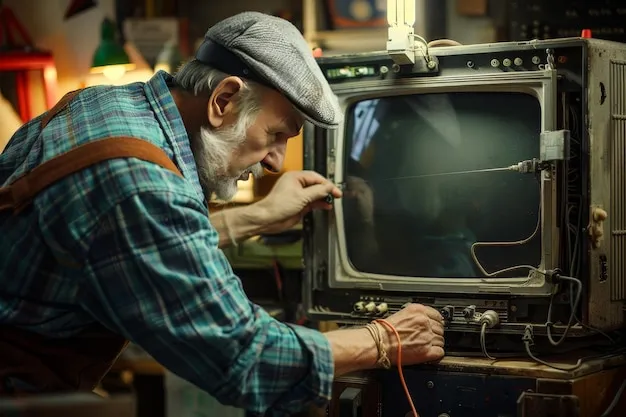
The Night Walter Cronkite Told America What to Think About — And Everyone Was Watching
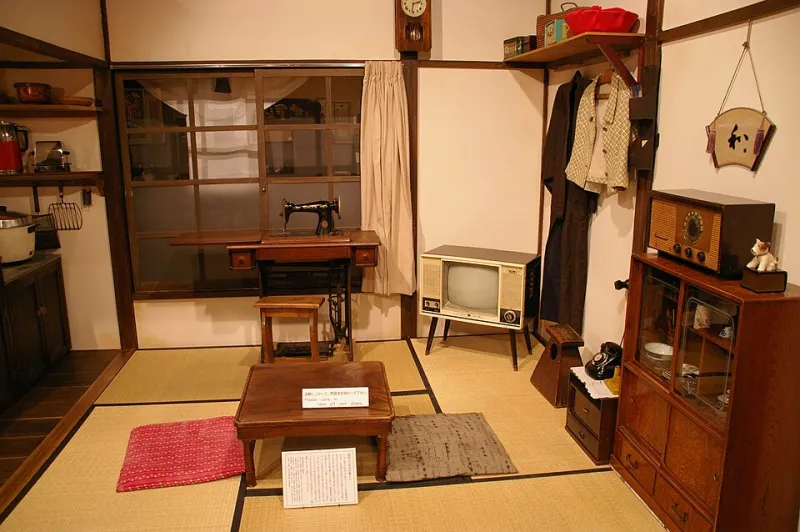
Photo: Satoru Fujiwara, CC BY 2.0, via Wikimedia Commons
On July 20, 1969, Walter Cronkite watched the Apollo 11 lunar landing live on air and, for a moment, completely lost his composure. He pulled off his glasses, rubbed his hands together, grinned like a kid at Christmas. Millions of Americans watched him do it — in real time, together, on the same channel, in the same emotional moment.
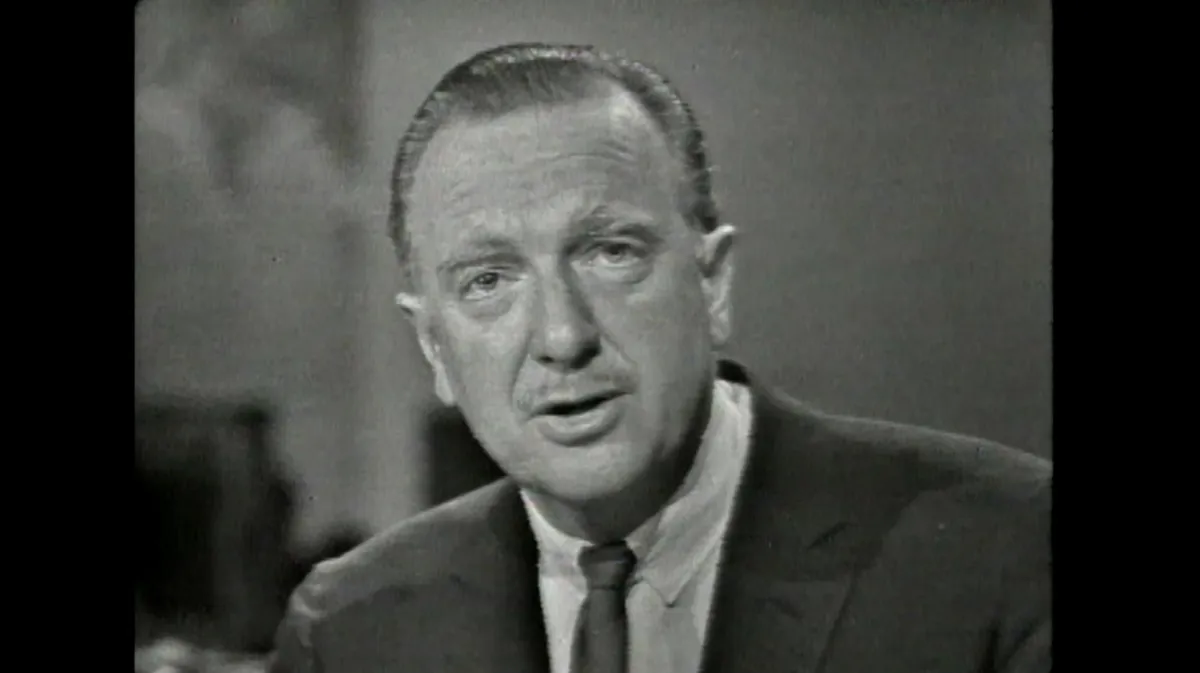 Photo: Walter Cronkite, via m.media-amazon.com
There was no other version of that night. No alternate feed. No algorithm deciding whether you were the kind of person who cared about the moon landing. You either had your television on, or you didn't. If you did, you watched Cronkite. And so did your neighbor, and your neighbor's neighbor, all the way down the block.
That shared experience — unremarkable at the time, almost incomprehensible now — was the defining feature of American news for roughly thirty years. And its disappearance has reshaped the country in ways we're still struggling to fully understand.
Three Channels, One Reality
The golden age of network news ran, more or less, from the early 1960s through the late 1980s. The mechanics were simple to the point of elegance: three broadcast networks — ABC, NBC, CBS — each aired a nightly news program at roughly the same time. No cable news. No internet. No podcasts, newsletters, or social feeds. If you wanted to know what was happening in the world, you watched one of three anchors deliver it to you in thirty minutes.
The viewership numbers from this era are staggering by modern standards. At his peak, Cronkite's CBS Evening News reached forty million Americans on an ordinary weeknight. Not for a major event — just Tuesday. Just the news.
The content those broadcasts delivered was curated by a relatively small number of editors and producers who operated under a shared professional framework. The Fairness Doctrine, in place from 1949 to 1987, required broadcasters to present contrasting views on controversial issues. News divisions were expected to inform, not to perform. Anchors were trained to project authority without overt ideology. The goal — imperfectly achieved, but genuinely pursued — was a version of events that a viewer of almost any political persuasion could recognize as factual.
It was, in retrospect, a kind of civic infrastructure. Nobody called it that at the time.
The Cracks, and Then the Flood
The system had real limitations worth acknowledging. The network news of the 1960s and 70s was overwhelmingly white, overwhelmingly male, and overwhelmingly centered on the concerns of a specific demographic slice of America. Stories that mattered enormously to Black Americans, to women, to immigrant communities, to rural populations outside the major media markets — these were routinely underweighted or ignored entirely. The "shared reality" was, for many Americans, someone else's reality delivered with authority.
Still, the infrastructure held until cable arrived and broke it open.
CNN launched in 1980. Twenty-four hours of news, all the time, which immediately changed the economics of the business. You couldn't fill twenty-four hours with the same measured, carefully edited content that worked in thirty-minute blocks. You needed more — more voices, more conflict, more urgency, more reasons for viewers to keep watching instead of turning off the television and going to bed. The news became a product that had to compete for attention rather than a public service that assumed it.
Fox News and MSNBC arrived in 1996, and with them came something genuinely new: ideologically oriented news networks that built their entire identity around serving a specific audience's existing beliefs. The goal was no longer to inform a broad public. It was to retain a loyal segment. The business model and the editorial model became the same thing.
The Personalization Endgame
If cable news fractured the shared experience, the internet and social media finished the job.
By the mid-2010s, the dominant mechanism through which most Americans encountered news was a social media feed curated by an algorithm whose primary objective was engagement. Not accuracy. Not balance. Not civic value. Engagement — which, as it turned out, was most reliably generated by content that triggered strong emotional responses: outrage, fear, tribal solidarity, moral certainty.
The result was something genuinely unprecedented in American history: two people living on the same street, voting in the same elections, paying the same taxes, could now consume entirely non-overlapping versions of reality. Not just different perspectives on the same facts — different facts entirely. Different stories. Different villains. Different crises. Different countries, almost.
Cronkite told America what to think about. He set an agenda that, for all its flaws, was at least common ground. Today's media landscape doesn't set a shared agenda. It sets a thousand separate ones, each optimized for a specific audience, each reinforcing what that audience already believes.
Was the Monoculture a Feature or a Bug?
It's tempting to romanticize the Cronkite era, and worth resisting that temptation at least a little. A media landscape controlled by three white men in New York was not a democratic ideal. The stories that didn't make the cut — the communities that didn't get covered, the perspectives that never made it to air — represent a real cost that shouldn't be minimized.
And yet.
There is something worth mourning in the loss of the shared experience. Not the specific content of mid-century network news, but the fact of it — the civic reality that when something happened, Americans processed it together. The Kennedy assassination. The moon landing. Watergate. Vietnam. These weren't just news events. They were collective experiences, witnessed simultaneously, processed through a common frame. The grief and the confusion and the pride were shared in real time across enormous differences of class and geography and politics.
That shared processing created something — a sense of national common ground, however imperfect — that is genuinely hard to manufacture when everyone is watching a different channel.
The Search for Common Ground
There's no obvious path back to a single trusted voice delivering a shared version of reality. The media landscape is too fragmented, the economics too entrenched, the audience too accustomed to content that confirms rather than challenges. The Fairness Doctrine isn't coming back. Cronkite isn't coming back.
What might be possible is something more modest: a renewed appreciation for the civic function that shared information serves, and a more honest reckoning with what the personalization revolution has cost alongside what it's gained.
Because the algorithm didn't just change how we get our news. It changed what we're willing to believe, who we're willing to trust, and whether we can even agree on what counts as a fact. Those are not small changes. Those are the kinds of changes that reshape democracies.
Walter Cronkite used to close every broadcast with four words: And that's the way it is.
We used to believe him. All forty million of us, at the same time.
We haven't had that since.