Sit Down, We'll Call You: The Vanishing Art of the Walk-In Doctor's Visit
There was no app. No confirmation text. No three-week lead time to secure a fifteen-minute slot. You woke up feeling wrong, told your mother, and by mid-morning you were sitting in a plastic chair next to someone's grandmother, flipping through a two-month-old copy of Life magazine, waiting for Dr. Kowalski to call your name.
This was American healthcare for much of the twentieth century — informal, unhurried, and built around the idea that a sick person shouldn't have to plan ahead to be seen. It wasn't perfect. But it was something we've largely forgotten how to do.
The Waiting Room as Neighborhood Commons
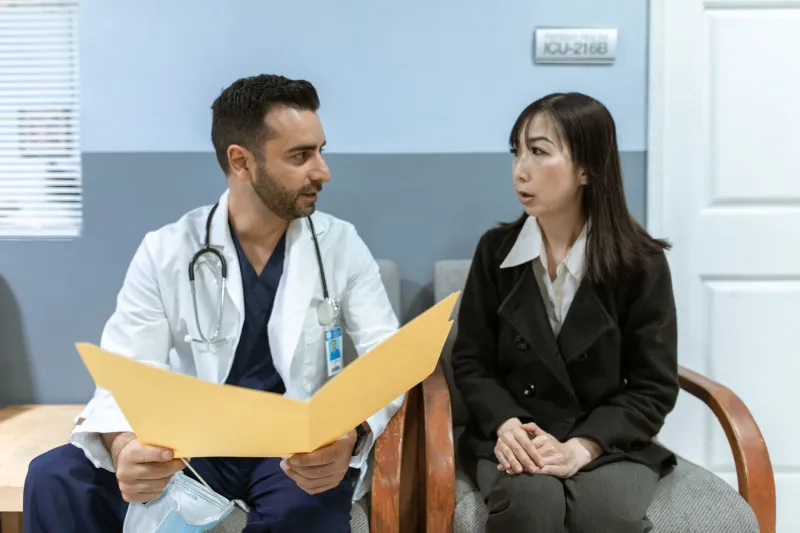
Walk into a small-town or neighborhood doctor's office in the 1950s or 1960s and you weren't just entering a medical facility. You were entering a social ecosystem. The chairs along the walls filled up in rough order of arrival, and nobody needed a number or a digital queue. People talked. They compared symptoms, traded home remedies, and updated each other on who had what going around. The elderly woman at the end of the row probably knew your aunt. The guy next to you had seen Dr. Petersen since he was seven years old.
This wasn't inefficiency — it was community infrastructure. The waiting room functioned as informal public health education. You learned that half the neighborhood had the same cough. You overheard conversations about diet, rest, and recovery that stuck with you longer than any pamphlet. And because everyone was waiting together, there was a shared patience, a collective understanding that health didn't run on a clock.
Dr. Petersen himself often moved between exam rooms and the waiting area, poking his head out to check on someone who looked pale, or stopping to reassure a nervous parent. He wasn't managing throughput. He was practicing medicine the way he'd been trained — by reading the room, literally.
When the Clock Took Over
The shift toward appointment-based medicine didn't happen overnight, but it accelerated sharply through the 1970s and 1980s as practices grew larger, insurance paperwork multiplied, and the economics of healthcare began demanding tighter scheduling. A doctor who saw patients at a relaxed, walk-in pace was leaving revenue on the table. A doctor with a full appointment book, fifteen-minute slots, and a receptionist managing the calendar was running a modern practice.
By the 1990s, showing up without an appointment to a primary care physician felt almost rude. The waiting room hadn't disappeared — it had just been reframed. Now it was the place you sat if you arrived early, not the place you sat because that was how medicine worked. The wait itself became a problem to be solved rather than a built-in feature of the experience.
Urgent care centers, which began proliferating in the early 2000s, tried to recapture some of that walk-in accessibility — but stripped of the long-term relationship with a physician who knew your history. You could be seen quickly, but by someone who had never met you before and might never see you again.
What We Gained — And What We Quietly Traded Away
Let's be honest about the gains. Appointment scheduling reduced wait times dramatically for people with non-urgent needs. It allowed doctors to prepare for visits in advance, review records, and spend more focused time on complex cases. It reduced the chaos that could leave a genuinely sick patient waiting three hours behind someone with a mild cold. For specialists especially, structured scheduling made care more precise and less arbitrary.
Telemedicine, the logical endpoint of this evolution, has taken efficiency even further. You can now consult a physician from your kitchen table, skip the commute, skip the waiting room entirely, and have a prescription sent to your pharmacy before lunch. For a straightforward issue, that's genuinely remarkable.
But here's what disappeared in the process: the slow, ambient accumulation of health literacy that came from being in a room with your community and a doctor who had time to think out loud. The old walk-in model forced a kind of patience that, paradoxically, made people more observant about their own bodies. You sat with your discomfort for an hour. You listened to others describe their symptoms. You watched how the doctor interacted with the elderly man ahead of you. By the time you were called, you'd already done some of your own diagnosing.
The modern appointment, optimized for efficiency, often strips that context away. You arrive, you're seen, you leave. The fifteen-minute window doesn't accommodate much wandering conversation. Doctors, buried in electronic health records they're required to complete during the visit, sometimes spend more time facing a screen than a patient.
The Room We Stopped Sitting In
There's a particular kind of knowledge that only comes from waiting — from being bored, slightly uncomfortable, and forced to be present in a shared space with strangers who are all there for the same reason. The old doctor's waiting room, for all its outdated magazines and flickering fluorescent lights, was a place where Americans quietly learned to navigate illness as a communal experience rather than a private transaction.
We traded that for speed and predictability, which are genuinely valuable things. But it's worth pausing — appropriately enough — to notice what the waiting room used to teach us, and to wonder whether any modern substitute has really filled that space.
Some things, it turns out, you can't schedule your way into.