Pin the Tail on the Memory: What We Gave Up When Birthday Parties Got Expensive
Somewhere between the backyard cake and the rented bounce house, children's birthday parties transformed from loose neighborhood gatherings into high-stakes productions. The shift says less about kids than it does about the adults throwing the parties — and what we've come to believe childhood is supposed to look like.
In 1965, a seven-year-old's birthday party looked something like this: eight kids from the neighborhood, a homemade cake with uneven frosting, a game of pin the tail on the donkey, and a stack of presents wrapped in Sunday comics. It lasted two hours. Everyone went home full of sugar and nobody filmed it.
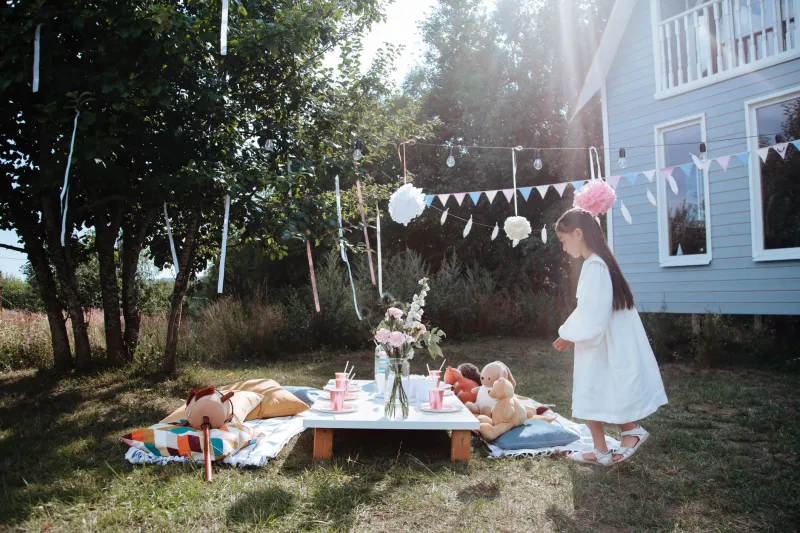
Today, that same party might involve a professionally decorated venue, a hired character from a popular franchise, a custom cake that costs more than a car payment, party favors assembled in personalized bags, and a carefully curated Instagram grid documenting every moment. The average American family now spends somewhere between $300 and $1,000 on a child's birthday party, with some celebrations running considerably higher. The backyard isn't gone — but it's been upgraded, themed, and photographed.
When Simple Was Enough
The mid-century birthday party was defined by its informality. Invitations were handwritten or delivered in person. The guest list was whoever lived on the block or sat in the same classroom. Games were whatever required the least equipment — musical chairs, red light green light, a piñata if someone was feeling ambitious.
The cake was almost always made at home. Betty Crocker and Pillsbury had built empires on the idea that a mother could produce something wonderful from a box, and for birthday purposes, that was entirely sufficient. Nobody expected a fondant sculpture of their child's favorite cartoon character. A round cake with the right number of candles and your name spelled out in frosting was the whole deal.
Gifts were modest by today's standards. A book, a board game, a toy that cost a few dollars. The birthday child tore through the pile in ten minutes, everyone ate cake, and that was the party. It was remembered — genuinely remembered — because it was personal, immediate, and unhurried.
The Escalation Began Quietly
The shift didn't happen overnight. Through the 1970s and 1980s, parties began inching toward the commercial. Chuck E. Cheese opened in 1977 and essentially invented the concept of the venue birthday party — a place where the entertainment, the food, and the games were all handled by someone else. It was a revelation for parents who were tired of cleaning up after fifteen kids in the living room.
Through the 1990s, the options multiplied. Laser tag. Bowling alleys. Movie theaters. Jump parks. Each offered a packaged experience that removed the logistical burden from parents and, gradually, repositioned the party as something to be consumed rather than created.
By the 2000s, the themed party had arrived in full force. Not just a color scheme or a favorite character, but a total aesthetic environment — matching plates, matching balloons, a banner, a backdrop, a cake that referenced the theme, party favors that extended it. Pinterest, which launched in 2010, poured gasoline on this trend. Suddenly there was an endless gallery of what parties could look like at their most elaborate, and the gap between the average party and the aspirational party became impossible to ignore.
The Pressure Behind the Decorations
What's driving this isn't just consumer culture, though that's part of it. It's anxiety — specifically, parenting anxiety about doing enough, being enough, and giving children an experience that measures up.
Social media has made childhood milestones public in a way they never were before. A birthday party isn't just something that happens; it's something that gets posted. The audience has expanded from the eight kids eating cake in the backyard to every parent you've ever met, every acquaintance you've ever had, every stranger who stumbles across a hashtag. In that context, a homemade cake and some lawn games can feel inadequate — not because it is, but because it doesn't photograph as well as a rented castle.
This creates a peculiar dynamic: parties are increasingly designed for adult eyes rather than child experience. The custom backdrop exists for the photos. The elaborate dessert table exists for the photos. The child, meanwhile, is often most interested in running around with their friends — the same thing kids have always been most interested in at parties.
What Kids Actually Remember
Research on childhood memory offers a useful corrective here. Children don't remember the quality of the decorations. They remember how they felt — whether they were excited, whether their friends were there, whether the cake tasted good, whether they laughed. The elaborate production and the backyard gathering are, from the child's internal perspective, often equivalent. What matters is presence and warmth, not production value.
Some parents are starting to push back. There's a quiet but growing movement toward simpler celebrations — the kind that prioritize the child's actual preferences over the aesthetics of documentation. A kid who wants to spend their birthday at the local pool with four best friends, eating grocery store cake, is having a genuinely great birthday. The photos just won't be as impressive.
The Party Was Never the Point
The backyard birthday party of the 1950s and 60s wasn't simple because parents cared less. It was simple because the goal was clear: make the kid feel special for a day. The means were modest, but the intention was direct.
Somewhere in the decades since, the means became the message. The party itself became the product — something to be designed, documented, and displayed. The child's joy became one element in a larger production rather than the whole point of the afternoon.
Pin the tail on the donkey was never really about the donkey. It was about a room full of kids laughing together. That part, at least, hasn't changed — even if everything around it has.