The Doctor Will See You Eventually: What the Long Wait Taught Us About Getting Better
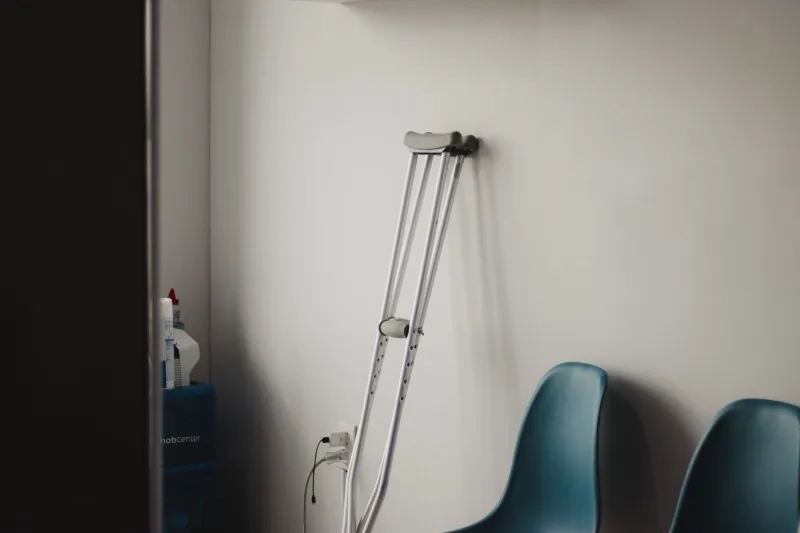
There was a time when waiting two hours to see your doctor wasn't a complaint — it was just Tuesday. You brought a magazine. Maybe you struck up a conversation with the woman across from you who had the same persistent cough. You watched the receptionist shuffle paper folders behind a frosted window. Nobody checked a phone. Nobody had a phone to check.
Somewhere between the avocado-green waiting room chairs of the 1970s and today's telehealth appointment that starts in exactly four minutes, we traded something we didn't know we had.
The Unhurried Office on Elm Street
In mid-century America, your family doctor was often a solo practitioner working out of a converted house on a residential street. His waiting room held maybe eight chairs and a stack of Reader's Digest issues that were six months old. Appointments were scheduled loosely — more like suggestions — and it wasn't unusual for a 10 a.m. slot to mean you'd be seen sometime before noon.
Nobody particularly liked waiting. But nobody expected otherwise, either. The wait was baked into the experience the way traffic is baked into a road trip. You planned around it. You arrived knowing it was part of the deal.
What happened inside that wait, though, was more interesting than it sounds. People sat with their symptoms. They had time to think about what they actually wanted to say. By the time you made it into the exam room, you'd mentally rehearsed your story, organized your concerns, and — maybe most importantly — you'd had two hours to decide whether you were really sick enough to be there. Sometimes people talked themselves out of their anxiety in the waiting room. Sometimes they talked themselves into asking the question they'd been too embarrassed to bring up at all.
There was also something about the pace of the appointment itself. When a doctor wasn't racing against a 15-minute billing window, he sat down. He asked follow-up questions. He circled back. Patients describe those visits — even decades later — as feeling heard in a way that a modern clinical encounter rarely replicates.
The Efficiency Revolution
Starting in the 1980s and accelerating hard through the managed care era of the 1990s, American medicine began optimizing for throughput. Insurance reimbursements got tied to visit codes. Visit codes got tied to time. Time became money in a way it hadn't been before, and the waiting room — that slow, slightly uncomfortable purgatory — became the enemy.
Today, a primary care physician sees an average of 20 patients a day in slots that typically run 15 to 20 minutes. Scheduling software fills gaps automatically. Electronic health records are supposed to make the handoff seamless. And if you can't make it in at all, there's a telehealth option that'll have you face-to-face with a provider inside the time it takes to microwave lunch.
On paper, this is unambiguously better. More patients seen. Less time wasted. Greater access. And for plenty of conditions — a sinus infection, a medication refill, a rash that needs identifying — it genuinely is better. Faster is fine when the problem is simple.
But something got lost in the optimization.
The Five-Minute Frustration
Here's the irony: patients today are less tolerant of waiting than they've ever been, even though the waits are shorter. A 2023 survey found that a significant portion of American patients will leave a waiting room — or leave a negative review — if kept waiting more than 15 minutes. That's a threshold that would have seemed almost comically brief to someone sitting in a 1974 waiting room with their second Reader's Digest of the afternoon.
We've engineered our expectations right alongside our systems, and the result is a strange kind of dissatisfaction that more efficiency keeps making worse.
There's also a clinical argument that deserves more attention than it gets. Research on the therapeutic relationship — the bond between patient and provider — consistently shows that perceived time and attentiveness correlate strongly with patient outcomes, treatment adherence, and even recovery rates. When patients feel rushed, they ask fewer questions. They omit details. They leave confused and don't call back to clarify. The 15-minute slot, designed to serve more people faster, sometimes ends up serving each person less well.
What Slowness Actually Did
This isn't an argument for going back to two-hour waits or paper folders. Nobody needs that. But it's worth being honest about the trade-off we made and what it cost us.
The old waiting room, frustrating as it was, created a kind of forced deceleration. You arrived at the doctor's office and the pace of your day changed whether you wanted it to or not. That shift — from the speed of normal life to the slower rhythm of the medical encounter — probably did something useful. It was a transition space. A place to move from busy person with a problem to patient who is ready to be examined.
Modern medicine has largely eliminated that transition. You can now see a doctor while sitting in your car, or during a work break, or between meetings. The convenience is real. But there's no shift. No deceleration. You're a busy person with a problem right up until the moment you're supposed to be a patient, and then you're a busy person with a problem again three minutes after the call ends.
The waiting room didn't just kill time. It changed your state of mind. And it turns out that state of mind was doing some of the work.
The Pace We Keep
Maybe the most telling thing about where we've landed is this: the places that still make you wait — the specialists, the teaching hospitals, the clinics with long appointment books — are often the same places people trust most. There's something about a provider whose time is in demand that reads as competent, even when the wait is annoying.
We haven't fully escaped the psychology of the waiting room. We've just stopped building rooms for it.