Your Great-Grandmother's Grocery Store Stocked Fewer Items Than Your Local Gas Station
Your Great-Grandmother's Grocery Store Stocked Fewer Items Than Your Local Gas Station
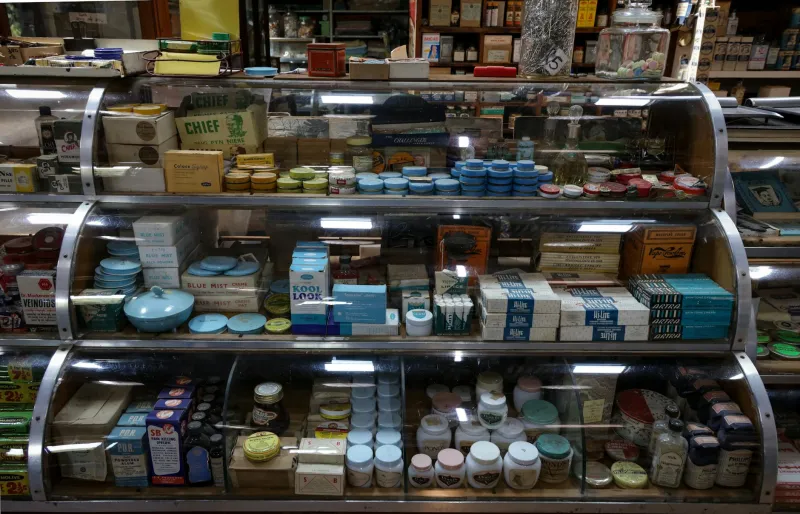
Picture a well-stocked American grocery store in 1955. Neat rows of canned goods. A modest produce section with whatever was in season locally. A butcher counter. Some dairy, some bread, maybe a small selection of frozen items if the store was modern enough to have a freezer case. The whole thing probably fit inside what today's supermarkets would designate as the cereal aisle.
Now consider that the average American supermarket today carries somewhere between 30,000 and 50,000 distinct products. That's not a typo. The transformation of the weekly grocery run — from a quick, predictable errand into a minor feat of navigation — happened faster than most people realize, and it changed far more than just the shopping experience.
The Store That Used to Be Enough
In 1950, the average American supermarket stocked roughly 3,000 items, according to data from the Food Marketing Institute. That sounds limiting until you consider that those 3,000 items were genuinely sufficient for how Americans cooked and ate at the time. Meals were built around a narrower repertoire. Produce was seasonal and largely domestic. Processed foods existed but hadn't yet metastasized into hundreds of competing varieties of the same basic product.
The stores themselves reflected this simplicity. Many were still independently owned, tied to regional suppliers and local farms. The supply chain was short — often because it had to be. Refrigerated long-haul trucking was in its infancy, air freight was expensive, and the infrastructure for moving fresh produce across the continent didn't yet exist at scale.
For most American families, grocery shopping meant knowing exactly what you were going to get. There wasn't much deliberating over which brand of pasta sauce to buy because there might be one brand of pasta sauce.
How the Shelves Started Filling Up
The expansion started in earnest through the 1960s and accelerated dramatically through the 1970s and 80s. Several forces converged at once.
The interstate highway system — completed in large part by the mid-1970s — made national distribution networks practical. A manufacturer in one region could now reliably stock shelves in another. Refrigerated trucking improved, and suddenly fresh produce from California or Florida could appear in a Minnesota store in winter. The frozen food industry boomed as home freezers became standard appliances.
At the same time, food manufacturers figured out that variety sells. If you can offer 12 varieties of breakfast cereal where a competitor offers four, you occupy more shelf space and capture more customers. This logic compounded across every category — yogurt, salad dressing, chips, bread, juice — until the sheer number of options became a selling point in itself.
By 1985, the average supermarket stocked around 15,000 items. By 2000, that number had crossed 30,000. Today, some larger format stores push past 50,000.
The Global Pantry That Nobody Planned
One of the quieter revolutions embedded in all of this is geographic. The 1955 grocery store was, almost by necessity, a local or regional pantry. Bananas might have been imported, and perhaps some canned goods came from distant processors, but the overall footprint was compact.
Today's supermarket is a feat of global logistics disguised as a routine errand. The shrimp in the seafood case might be farmed in Vietnam. The garlic almost certainly came from China. The olive oil is probably Spanish or Italian. The quinoa traveled from Peru. The asparagus, if it's February, flew in from Chile. Shoppers who've never given this a second thought are quietly participating in one of the most complex supply networks in human history every time they push a cart down the produce aisle.
This has real benefits — year-round access to variety, lower prices on many staples, the ability to cook cuisines from around the world without specialized shopping trips. But it also means the average American is now several steps further from knowing where their food actually came from than their grandparents ever were.
The Paradox of 30,000 Choices
Here's the thing about abundance: it doesn't always feel like a gift. Psychologists have spent decades documenting what's sometimes called the paradox of choice — the phenomenon where more options lead to more anxiety, more second-guessing, and less satisfaction with whatever you ultimately pick.
The 1950s grocery shopper didn't agonize over which of 47 yogurt varieties to put in the cart. There were two, maybe three. Decision made. Today, the yogurt aisle alone can stretch 30 feet and present dozens of brands, fat percentages, flavor profiles, protein levels, and cultural varieties — Greek, Icelandic, Australian, drinkable, squeezable. It's a lot.
Stores have responded to this with their own navigational architecture — end caps, promotional displays, store brands positioned strategically, loyalty app suggestions — all designed to help shepherd you through the volume. Which is to say: there's now an entire design discipline devoted to helping you cope with the abundance that the same industry created.
A Different Kind of Errand
The weekly grocery run used to be a simple transaction. You knew what you needed, the store had it, you went home. Today it's closer to a curated experience — one that reflects global trade policy, agricultural technology, food science, marketing psychology, and shifting American tastes all at once.
That's remarkable, even if it rarely feels that way when you're standing in the chip aisle trying to remember whether you already have crackers at home. The shelves changed. And quietly, so did we.