The One Screen That Made Every Family Choose Together
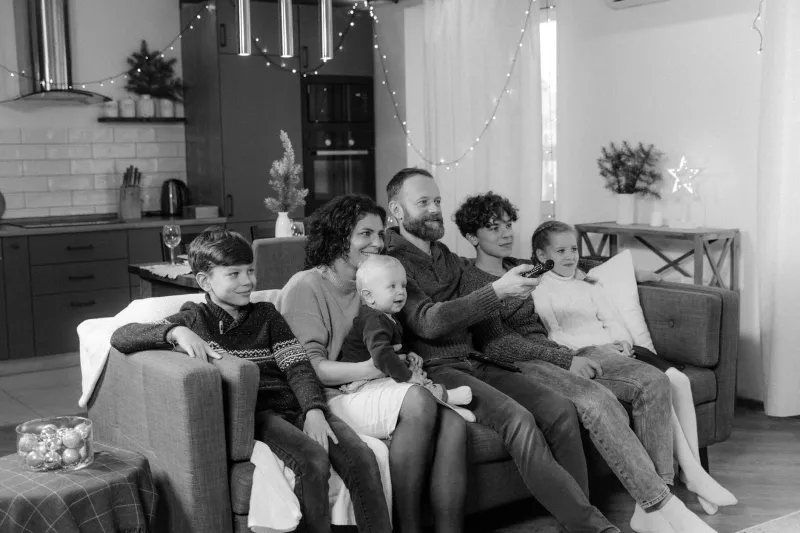
The Living Room Democracy
Every weeknight at 7:30, the Martinez family faced the same delicate negotiation. Dad wanted the news. Mom preferred her evening soap opera. Teenage Maria lobbied for whatever music show was trending, while ten-year-old Carlos made his case for cartoons. With only one television in the house and three networks to choose from, someone had to win, someone had to compromise, and everyone had to live with the decision.
This wasn't a problem — it was the point. The family television wasn't just an entertainment device; it was a democratic institution that required conversation, compromise, and shared experience. When the Martinez family watched "The Cosby Show" together on Thursday nights, they weren't just consuming entertainment — they were participating in a national cultural moment that millions of other families were experiencing simultaneously.
Today, each member of the Martinez family has their own screen, their own streaming account, and their own algorithm-curated queue. They can watch whatever they want, whenever they want, wherever they want. The question is: what did we lose when we gained that freedom?
When Television Was Appointment-Based
The television landscape of the 1970s and 80s operated on a fundamentally different premise than today's on-demand world. Programming was scarce, choice was limited, and timing was everything. If you wanted to watch "Dallas," you had to be in front of your TV on Friday nights at 10 PM. Miss it, and you missed it entirely — there were no DVRs, no streaming platforms, no second chances.
This scarcity created something remarkable: shared cultural moments. When J.R. Ewing was shot on "Dallas," it wasn't just entertainment — it was a national event. The "Who Shot J.R.?" storyline dominated office conversations, newspaper headlines, and family discussions for months. Everyone was literally on the same page because everyone was watching the same shows at the same time.
Families developed viewing rituals around this shared scarcity. Sunday nights meant "The Wonderful World of Disney." Saturday mornings belonged to cartoons — a sacred time when kids controlled the remote and parents slept in. Prime time was family time, when parents and children negotiated viewing choices and experienced stories together.
The physical setup reinforced the communal nature of television watching. The TV was typically the focal point of the living room, surrounded by couches and chairs arranged to optimize viewing for multiple people. Remote controls were luxury items that families shared, often leading to playful battles over channel changing privileges.
The Art of Compromise
Limited choice meant constant negotiation. Families developed elaborate systems for sharing television time. Some operated on rotation schedules — Dad got the news, then Mom got her show, then the kids got their program. Others used democratic voting, with majority rule determining the evening's entertainment.
These negotiations weren't always smooth, but they served an important function: they taught family members to consider each other's preferences and find common ground. Kids learned that their desires weren't automatically paramount, and parents discovered new shows through their children's enthusiastic recommendations.
The shared viewing experience also created natural conversation opportunities. Commercial breaks became discussion periods where families could debate plot points, predict outcomes, or simply chat about their days. The act of watching television together provided a structured way for families to spend time in the same space, even if they weren't actively engaging with each other throughout the program.
Many families remember these viewing sessions as bonding experiences. Parents and children developed inside jokes based on favorite shows, shared emotional reactions to dramatic moments, and created memories around television events that lasted for decades.
The Multiplication of Screens
The transformation began in the 1990s with the proliferation of cable channels and multiple television sets per household. Suddenly, families could scatter to different rooms to watch different programs. The kitchen TV, the bedroom TV, and eventually the computer screen began fragmenting the shared viewing experience.
The introduction of VCRs and later DVRs further eroded appointment television. Families could record shows and watch them later, breaking the synchronization with both broadcast schedules and other families. Time-shifting technology gave viewers control over when they watched, but it also meant that family members might experience the same show at different times.
The internet accelerated this fragmentation. Computers offered not just different programming but entirely different forms of entertainment. While parents watched traditional television in the living room, kids migrated to computer screens for games, videos, and early social media.
Smartphones and tablets completed the transformation. By 2010, each family member could carry their own personal entertainment center, complete with access to virtually unlimited content. The shared screen became one option among many, rather than the only option.
The Algorithm Knows What You Want
Today's streaming services have perfected the art of personalization. Netflix's algorithm analyzes viewing history, ratings, and even the time of day to curate individual recommendations. Spotify creates custom playlists based on listening habits. YouTube suggests videos based on previous searches and views.
This personalization delivers remarkable convenience and satisfaction. Instead of settling for whatever happens to be on television, viewers can access exactly what they want to watch, when they want to watch it. The frustration of being outvoted by family members or missing favorite shows has largely disappeared.
But personalization has also created what media scholars call "filter bubbles" — individualized information and entertainment ecosystems that rarely overlap with others. Family members consuming different content on different devices at different times have fewer shared cultural references and experiences.
The recommendation algorithms that make individual viewing so satisfying actually work against shared viewing. They're designed to identify and amplify personal preferences, not to find common ground or introduce viewers to content outside their established tastes.
What We Gained and Lost
The shift from shared to individual viewing has delivered undeniable benefits. Families no longer argue about what to watch because everyone can watch what they prefer. Parents can enjoy adult programming without worrying about age-appropriate content. Kids can explore their interests without being constrained by family preferences.
Personal devices also offer privacy and independence that the family television never could. Teenagers can explore identity and interests without parental oversight. Adults can indulge in guilty pleasures without judgment. Everyone has access to content that matches their specific tastes and interests.
But something intangible has been lost in this transition. The shared television experience created natural opportunities for families to spend time together, even if they weren't actively interacting. It provided common cultural touchstones that facilitated conversation and connection.
Modern families often struggle to find shared activities that appeal to all age groups and interests. The default mode has shifted from "What should we watch together?" to "What does everyone want to watch separately?"
The Search for Shared Experience
Some families are consciously working to recreate shared viewing experiences in the streaming age. "Family movie night" has become a deliberate activity rather than a natural occurrence. Families gather to watch specific shows together, often binge-watching entire seasons as shared experiences.
Major television events still create temporary returns to collective viewing. The Super Bowl, award shows, and finale episodes of popular series can still bring families together around screens. But these moments feel increasingly special precisely because they're increasingly rare.
Streaming services have begun to recognize the value of shared experiences. Netflix's "Netflix Party" feature allows remote viewers to synchronize their watching and chat during shows. Disney+ emphasizes family-friendly content designed for multi-generational viewing.
But technology solutions can't fully replicate the organic nature of the old shared television experience. The difference between choosing to watch together and having to watch together may seem subtle, but it has profound implications for family dynamics and cultural cohesion.
Beyond Entertainment
The story of television's evolution from shared to individual reflects broader changes in American family life and social organization. We've gained unprecedented personal choice and freedom, but we've also lost some of the natural mechanisms that once brought different generations and perspectives together.
The family television was never just about entertainment — it was about negotiation, compromise, and shared experience. It was about learning to coexist with people who had different preferences and finding common ground in a world of limited options.
Today's abundant choices and personalized algorithms deliver exactly what we think we want, but they may be depriving us of something we didn't know we needed: the experience of discovering common ground with the people we live with, and the simple but profound act of sharing the same story at the same time.
As we continue to fragment into increasingly personalized media bubbles, the old family television — with its limited channels, scheduled programming, and democratic remote control — starts to look less like a constraint and more like a lost opportunity for connection.