Before Doppler Radar, Your Weekend Plans Depended on a Guy With a Barometer
When Weather Predictions Were More Like Educated Hunches
Picture this: You're planning a family picnic in 1950. You turn on the radio, and the weatherman confidently declares, "Fair skies expected tomorrow." You pack the sandwiches, load the car, and drive to the park—only to get drenched by an unexpected thunderstorm that seemingly came out of nowhere.
This wasn't bad luck. It was Tuesday.
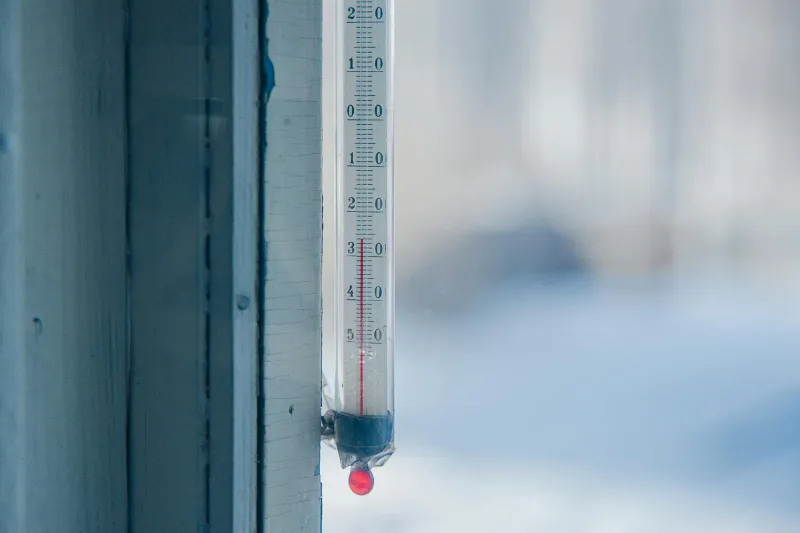
For most of human history, weather forecasting was essentially sophisticated guesswork dressed up in scientific language. Meteorologists had barometers, thermometers, and wind gauges, but predicting what would happen more than 24 hours out was like throwing darts blindfolded. The accuracy rate for three-day forecasts hovered around 50%—you might as well have flipped a coin.
The Human Cost of Getting It Wrong
These weren't just minor inconveniences. Bad weather predictions could devastate entire communities. Farmers planning their harvests relied on seasonal forecasts that were often wildly off-mark. A surprise frost could wipe out thousands of dollars worth of crops because the weather service missed the warning signs.
Airline pilots faced even deadlier stakes. Without accurate storm tracking, planes regularly flew into severe weather that forecasters never saw coming. The 1950 crash of Northwest Orient Flight 2501 over Lake Michigan happened partly because meteorologists couldn't accurately predict the massive thunderstorm system the plane encountered.
Fishermen would head out to sea based on fair weather predictions, only to find themselves battling 15-foot waves when storms materialized faster than anyone expected. Coastal communities had little warning before hurricanes made landfall—sometimes just hours instead of the week-long preparation time we take for granted today.
The Tools That Changed Everything
The transformation started in the 1950s when the first weather satellites launched into orbit. Suddenly, meteorologists could see storm systems forming over the Pacific Ocean days before they reached California. But the real game-changer came with Doppler radar in the 1980s.
Doppler technology didn't just show where precipitation was falling—it could detect the speed and direction of wind patterns inside storm clouds. For the first time, forecasters could see tornadoes forming in real-time and issue warnings with actual precision instead of educated guesses.
Today's weather prediction relies on supercomputers that process billions of data points every hour. The National Weather Service runs models that factor in ocean temperatures, jet stream patterns, atmospheric pressure readings from thousands of weather stations, and real-time satellite imagery. These computers can simulate how weather systems will interact days in advance with stunning accuracy.
From Crystal Balls to Crystal Clear
Modern five-day forecasts are more accurate than next-day predictions were in the 1960s. Your smartphone weather app processes more atmospheric data in a single update than an entire weather bureau had access to fifty years ago.
We've become so accustomed to reliable forecasts that we plan outdoor weddings weeks in advance, schedule construction projects around predicted dry spells, and book beach vacations with confidence. Airlines route thousands of flights around storm systems that satellites spot forming over the middle of the ocean.
The National Hurricane Center now tracks tropical storms from the moment they develop off the coast of Africa, giving Gulf Coast residents up to a week to prepare for potential landfalls. Compare that to 1900, when the Galveston Hurricane struck with virtually no warning, killing over 8,000 people.
The Weather App Revolution
Perhaps most remarkably, this sophisticated forecasting technology now fits in your pocket. The same satellite data and computer modeling that once required massive government facilities is instantly available on your phone. You can check hour-by-hour precipitation forecasts, see real-time radar imagery, and get severe weather alerts pushed directly to your device.
Weather apps have become so precise they'll tell you when rain will start and stop down to the minute. Some can predict exactly when clouds will clear at your specific location. Features like "rain starting in 12 minutes" would have sounded like science fiction to meteorologists just a few decades ago.
When Accuracy Became Expected
This transformation happened so gradually that most people don't realize how dramatically weather forecasting has improved. We've gone from a world where wrong predictions were the norm to one where we get genuinely annoyed if the forecast is off by a few degrees.
Our entire relationship with weather has changed. Previous generations dressed for whatever might happen and carried umbrellas just in case. We plan our days around specific hourly forecasts and feel betrayed when it rains during a predicted sunny spell.
The next time you casually check your phone to see if you need a jacket this afternoon, remember that you're accessing a level of atmospheric prediction that would have seemed like magic to your grandparents. What was once the realm of folklore and farmer's almanacs has become a precise science that we literally carry in our pockets.