Before Amazon, There Was the Big Book: How America Shopped From a 1,500-Page Catalog That Delivered Dreams
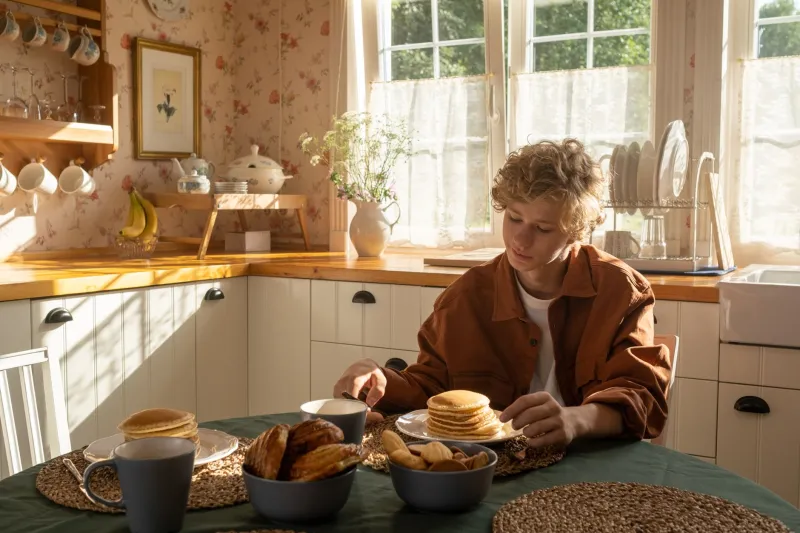
Every fall, something magical happened in American households across the country. A thick book would arrive in the mail—sometimes weighing over four pounds—and families would gather around the kitchen table to plan their year. Children would dog-ear pages full of toys they wanted for Christmas. Parents would debate whether they could afford that new washing machine or winter coat.
This wasn't just any book. It was the Sears Roebuck catalog, and for nearly a century, it was America's everything store.
The Original One-Stop Shop
In 1893, when Richard Sears and Alvah Roebuck published their first catalog, they created something that had never existed before: a comprehensive marketplace that could reach anyone with a mailing address. The timing was perfect. Rural America was hungry for goods that were only available in big cities, and the newly expanded railroad network could deliver them.
 Photo: Alvah Roebuck, via i.etsystatic.com
 Photo: Richard Sears, via wiolettawpodrozy.pl
That first catalog was just 80 pages long and focused mainly on watches and jewelry. But Sears understood what would become a fundamental principle of modern commerce: convenience sells. Why limit yourself to one product category when you could sell everything a family might need?
By 1908, the Sears catalog had grown to over 1,400 pages and included more than 100,000 items. You could buy a hammer on page 347, a wedding dress on page 892, and a complete house kit on page 1,159. If you needed it, Sears probably sold it.
The Psychology of Wishful Browsing
Long before Amazon's recommendation algorithms, Sears mastered the art of making people want things they didn't know they needed. The catalog wasn't just a shopping tool—it was entertainment, education, and aspiration all rolled into one.
Families would spend hours "wishing" through the catalog, a ritual that modern parents might recognize as eerily similar to scrolling through social media. Children would create elaborate Christmas lists that stretched across multiple pages. Parents would plan major purchases months in advance, saving up for items they'd circled and re-circled.
The catalog understood that shopping is emotional. Product descriptions weren't just functional—they painted pictures of better lives. A simple dress became "perfect for Sunday services and special occasions." A tool set promised to help "any man tackle projects around the home with professional results."
Democratizing Desire
For rural Americans, the Sears catalog was a window into a world of possibilities that would have been impossible to access otherwise. A farmer's wife in Kansas could order the same fashionable dress worn by women in Chicago. A small-town mechanic could buy professional-grade tools that were only available in industrial cities.
This democratization of consumer goods had profound social effects. The catalog helped standardize American taste and style across geographic boundaries. It also created new forms of social anxiety—suddenly, everyone could see exactly what they were missing.
The catalog was particularly revolutionary for women. In an era when many small towns had limited shopping options and social norms restricted women's mobility, the catalog provided unprecedented access to goods and a degree of shopping independence that was otherwise unavailable.
The Trust Infrastructure
Perhaps most remarkably, this entire system was built on trust. Customers sent cash or money orders through the mail to a company they'd never visited, trusting that the right products would arrive weeks later. Sears had to build that trust from scratch.
The company pioneered customer service practices that seem obvious today but were revolutionary at the time. They offered detailed product descriptions, money-back guarantees, and a liberal return policy. If you weren't satisfied with your purchase, you could send it back—no questions asked.
Sears also understood that trust required transparency. The catalog included detailed sizing charts, fabric samples, and honest descriptions of product limitations. They knew that one disappointed customer could poison an entire community against mail-order shopping.
The Decline of the Big Book
The Sears catalog reached its peak in the 1960s and 1970s, when it was being delivered to over 20 million American households. But several forces were working against it.
Suburban shopping malls provided local access to the variety that had once required mail-order shopping. Credit cards made it easier to buy things immediately rather than saving up for catalog purchases. And television advertising created new ways for brands to reach consumers directly.
Most importantly, American culture was shifting toward instant gratification. The catalog required patience—you had to wait weeks for your order to arrive. As the country became more urbanized and mobile, that waiting period felt increasingly anachronistic.
Sears discontinued its general merchandise catalog in 1993, ending an era that had lasted exactly one hundred years.
The Digital Echo
Looking back, the Sears catalog pioneered almost every aspect of modern e-commerce. It created the concept of browsing for pleasure rather than necessity. It used detailed product photography and descriptions to overcome the inability to physically examine merchandise. It built customer loyalty through consistent service and easy returns.
Most importantly, it understood that successful retail isn't just about selling products—it's about selling possibilities. The catalog didn't just show you what things looked like; it showed you what your life could look like if you owned them.
Amazon's "customers who bought this item also bought" feature is essentially a digital version of the catalog's carefully curated product placement. The company's emphasis on customer reviews echoes Sears' commitment to transparent product information. Even Amazon's marketplace model, where third-party sellers offer goods through a central platform, mirrors the catalog's role as a comprehensive shopping destination.
The Lost Art of Anticipation
What we can't replicate is the anticipation that made catalog shopping special. In an era of same-day delivery and instant everything, it's hard to imagine the excitement of waiting six to eight weeks for a major purchase to arrive.
That waiting period wasn't just a logistical necessity—it was part of the experience. It built excitement, justified the expense, and made the eventual arrival feel like Christmas morning. Families would track their orders through the mail system, watching for the telltale Sears packaging that meant their dreams had finally arrived.
Today's consumers have gained unprecedented convenience and selection, but we've lost something too: the simple pleasure of wanting something for a while before we get it. The Sears catalog understood that anticipation isn't a bug in the shopping experience—it's a feature.
In our rush toward instant gratification, we might have solved the wrong problem. The catalog didn't just deliver products; it delivered hope, one carefully planned purchase at a time.