When Words Had Weight: The Lost Art of Letters That Actually Mattered
The Ritual That Made Every Word Count
In 1962, the average American wrote 43 personal letters per year. Not business correspondence or formal notes, but real letters—to friends, family, lovers, and pen pals scattered across the country. Each one was an event.
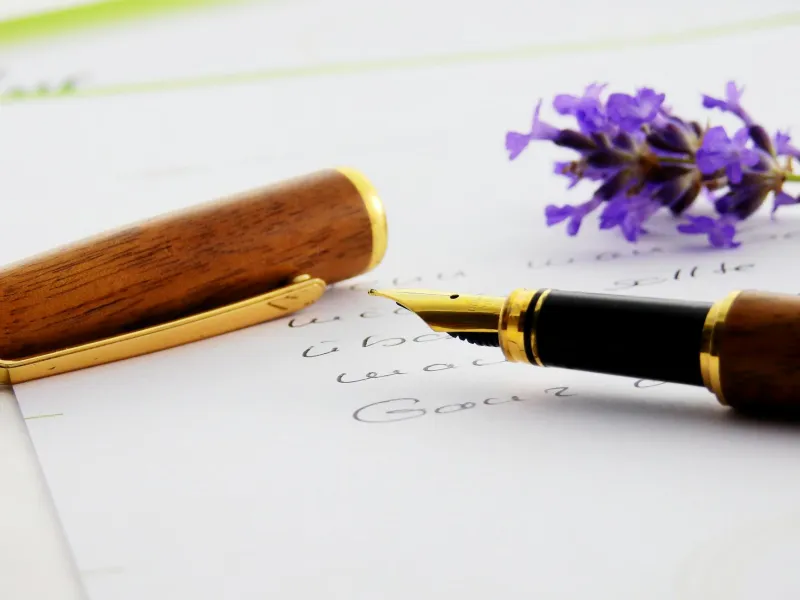
You'd walk to the drugstore and choose your stationery. Maybe cream-colored with a subtle border, or crisp white bond that felt substantial between your fingers. The paper itself was a decision that said something about you and the person you were writing to. Then came the pen—never a ballpoint for anything important. A fountain pen or at least a good rollerball that would leave clean, deliberate lines.
Sitting at your kitchen table or bedroom desk, you'd think before you wrote. Really think. Because once the ink hit the paper, there was no backspace key, no delete button. You had to mean what you said the first time, or start over with a fresh sheet.
The Economics of Emotional Investment
Writing a letter in mid-century America cost you something. Time, obviously—the average personal letter took 20-30 minutes to compose and another 10 minutes to address and seal properly. But it also cost money. Good stationery wasn't cheap, and a first-class stamp represented real purchasing power. In 1965, when stamps cost 5 cents, that was enough to buy a candy bar or a local phone call.
More importantly, it cost you emotional energy. You couldn't dash off a quick "thinking of you" and feel like you'd maintained the relationship. Letters demanded substance. They required you to sit with your thoughts, organize them, and express them clearly enough that someone reading them three days later would understand not just what you meant, but how you felt.
Psychologist Dr. Sherry Turkle's research at MIT suggests this friction wasn't a bug—it was a feature. When communication requires effort, we invest more of ourselves in it. We choose our words more carefully, think more deeply about our relationships, and create exchanges that both parties remember.
The Three-Day Promise
Every letter came with an implicit contract: I will wait for your response, and you will wait for mine. In major cities, a letter mailed on Monday might arrive Wednesday and be answered by Friday. Between coasts, you were looking at a week for the full round trip. Between rural areas, sometimes longer.
This waiting wasn't seen as inconvenience—it was anticipation. It gave weight to correspondence that today's instant messaging can't match. When someone took three days to write back, you didn't assume they were ignoring you. You assumed they were living their life, and that your letter was important enough to deserve a thoughtful response when they had time to give it.
Families separated by distance built entire relationships around this rhythm. College students wrote home every Sunday. Young men drafted overseas sent letters that their girlfriends would read and re-read until the next one arrived. The delay created space for longing, reflection, and genuine appreciation for human connection.
What We Gained by Losing Everything
Today, the average American sends 32 text messages per day. We can reach anyone, anywhere, instantly. We've eliminated the friction, the cost, the waiting, and the ceremony. We've made communication so easy that we barely think about it anymore.
And that's exactly the problem.
When psychologists study modern digital communication, they find it's remarkably shallow. The average text message contains just 7 words. Email is longer but often purely functional. Even our most intimate digital exchanges lack the depth and intentionality that characterized letters from the pre-digital era.
We've traded depth for speed, permanence for convenience, and ceremony for efficiency. The love letters that previous generations kept in shoeboxes for decades have been replaced by emoji hearts that disappear into the digital ether.
The Handwriting on the Wall
By 2019, the US Postal Service was delivering just 54.9 billion pieces of mail annually—down from a peak of 213 billion in 2006. Most of that remaining mail is packages and bills. Personal letters have virtually vanished from American life.
 Photo: US Postal Service, via thumbs.dreamstime.com
What died with them wasn't just a communication method—it was a way of relating to each other that required patience, intentionality, and genuine emotional investment. In our rush to connect instantly with everyone, we may have lost the ability to connect deeply with anyone.
The next time you start to fire off a quick text, imagine instead sitting down with good paper and a real pen. Imagine choosing each word carefully, knowing it will matter to someone three days from now. Imagine what you might say if you knew this message would be kept, re-read, and treasured.
That's what we gave up when we decided that faster was always better.