The Great American Shutdown
Every evening at precisely 6 PM, something remarkable happened across America: the country went to sleep. Not literally, of course, but economically. Store lights dimmed, cash registers locked shut, and "CLOSED" signs flipped in windows from coast to coast. If you needed milk at 8 PM, you waited until morning. If you ran out of gas after dinner, you pushed your car to the nearest station and hoped they opened early.
This wasn't inconvenience—it was simply how America operated for most of its commercial history. The idea that you could buy groceries at midnight or pick up prescription medication at 3 AM was as foreign as flying cars or robot butlers.
The Rhythm of a Different Economy
In 1960s America, business hours followed a predictable pattern that shaped the entire culture. Department stores opened at 9 AM and closed at 6 PM, Monday through Saturday. Many businesses shuttered completely on Sundays, honoring both religious tradition and the practical reality that most customers were at home with family.
Gas stations typically closed by 8 PM, forcing drivers to plan their evening travels carefully. Pharmacies locked their doors after dinner, which meant that a sick child's fever in the middle of the night had to wait until morning for medication. Grocery stores might stay open until 9 PM on Fridays—considered "late night" shopping at the time—but Saturday meant racing to finish errands before the 6 PM deadline.
Restaurants followed an even more rigid schedule. Most establishments served dinner until 8 or 9 PM, then closed completely. The idea of ordering food at 11 PM existed only in the largest cities, usually limited to a handful of diners that catered to shift workers and insomniacs.
The Quiet Hours
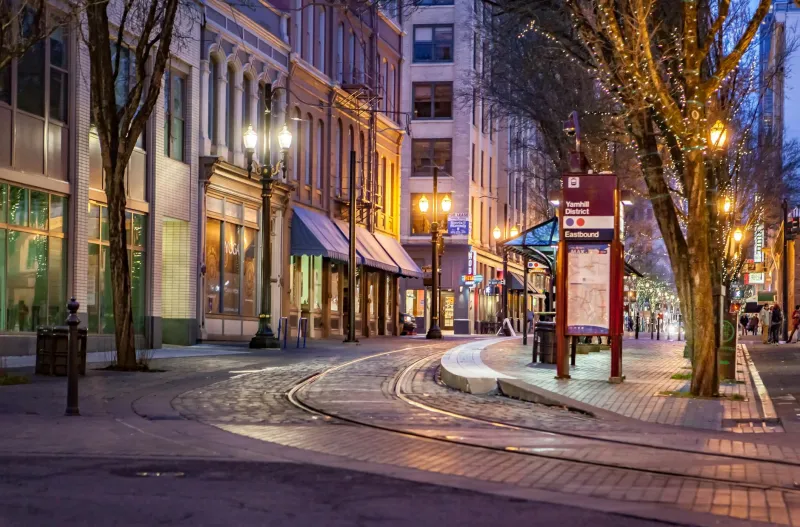
This universal shutdown created something that modern Americans have never experienced: true commercial quiet. After 9 PM, most of America's retail districts entered a state of peaceful dormancy. Main Streets that buzzed with activity during the day became empty corridors of darkened storefronts and silent parking meters.
Families adapted their lives to this rhythm. Grocery shopping happened on Saturday mornings. Gas tanks were filled before Sunday drives. Prescription refills required advance planning. The evening hours belonged to home life, not commerce.
This forced a different relationship with time and planning. Running out of essential items after business hours meant making do with what you had, borrowing from neighbors, or simply waiting until morning. The inconvenience bred self-reliance and community interdependence that the 24-hour economy has largely eliminated.
The First Cracks in the Wall
7-Eleven changed everything, though not immediately. When the chain began experimenting with extended hours in the 1960s, staying open until 11 PM seemed revolutionary enough to inspire their name. The concept of truly round-the-clock retail was still years away.
The first 24-hour stores appeared in the 1970s, primarily in urban areas where shift workers created demand for off-hours shopping. These pioneer businesses were novelties, often viewed with suspicion by communities accustomed to the natural rhythm of business hours that matched human sleep cycles.
Gas stations were among the early adopters of extended hours, driven by interstate highway travel and the growing mobility of American families. But even into the 1980s, finding an open gas station after 10 PM required local knowledge or considerable luck.
The Always-On Revolution
The transformation accelerated rapidly in the 1990s. Walmart's 24-hour Supercenters began reshaping consumer expectations, proving that Americans would shop at any hour if given the opportunity. The internet economy of the late 1990s created a culture that never truly slept, and brick-and-mortar retail struggled to keep pace.
By 2000, 24-hour everything had become not just normal but expected. CVS pharmacies stayed open all night. McDonald's served breakfast at 3 AM. Home Depot welcomed contractors shopping for supplies before dawn. The economic engine that once powered down each evening now ran continuously, creating jobs, convenience, and an entirely new relationship between Americans and time itself.
What We Lost When We Gained Everything
The death of universal business hours eliminated more than inconvenience—it erased a shared rhythm that had organized American life for generations. When stores closed at 6 PM, families naturally gathered for dinner without the distraction of errands that could be run "later." Evening hours belonged to conversation, reading, hobbies, and rest.
The always-open economy also changed the nature of work itself. Retail employees once enjoyed predictable schedules that aligned with family life. The 24-hour economy created a new class of workers whose shifts began when most people were sleeping, fracturing the traditional patterns of community life.
Neighborhood relationships shifted as well. When everyone's shopping had to be completed by evening, chance encounters at the local grocery store or hardware store were common. The 24-hour economy dispersed these interactions across all hours, reducing the likelihood of spontaneous community connections.
The Modern Midnight Economy
Today's America operates on the assumption that commerce never sleeps. Amazon delivers packages at midnight. DoorDash brings restaurant meals to your door at 2 AM. Grocery pickup is available before sunrise. The idea that you might have to wait until morning for anything seems quaint, almost primitive.
This convenience comes with hidden costs. The energy required to keep millions of businesses illuminated and staffed around the clock represents a massive environmental impact. The social cost of fragmenting work schedules across all hours has weakened the shared rhythms that once bound communities together.
The Quiet We'll Never Know Again
Perhaps most significantly, we've lost the collective pause that evening business closures once provided. Modern Americans live in a state of perpetual commercial availability, where the option to shop, order, or consume exists at every moment. The forced downtime that once characterized American evenings—when running errands was simply impossible—created space for other activities that required no transaction.
The 6 PM shutdown that once defined American commerce now exists only in memory and old photographs of empty Main Streets. We gained unprecedented convenience and lost something harder to quantify: the peaceful certainty that some hours belonged to rest, not commerce.
In our rush toward 24-hour availability, we created an economy that never sleeps. Whether we're better rested for it remains an open question.