When 3:15 Meant Freedom
For generations of American children, the final school bell of the day wasn't just the end of classes—it was the starting gun for real life. The moment that last ring faded, kids would burst through classroom doors and scatter into their neighborhoods like marbles released from a jar, not to be seen again until the streetlights flickered on or Mom's voice echoed through the evening air calling them home for dinner.
This wasn't neglect or poor parenting. It was childhood as it had existed for decades: unstructured, unsupervised, and utterly essential to growing up.
The Neighborhood as Playground
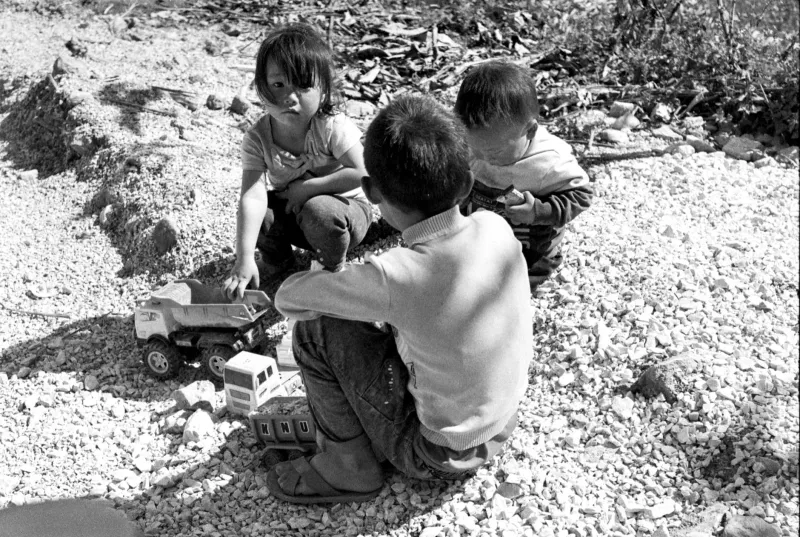
Without organized activities to rush toward, children had to become inventors of their own entertainment. Empty lots became baseball diamonds. Creek beds transformed into exploration sites. Backyard forts evolved into elaborate kingdoms with complex rules and hierarchies that shifted daily based on who showed up and what materials could be scrounged from garage sales and construction sites.
Kids learned negotiation skills by trading baseball cards and organizing pickup games. They developed problem-solving abilities by figuring out how to retrieve a frisbee from Mrs. Henderson's roof without getting in trouble. They built resilience by dealing with scraped knees, hurt feelings, and the social dynamics of neighborhood groups without immediate adult intervention.
The absence of structured programming meant children had to confront something that has almost disappeared from modern childhood: boredom. And in that boredom, creativity flourished. A cardboard box could become a spaceship, a fort, or a sled depending on the day's inspiration. A stick might serve as a sword, a fishing pole, or a magic wand based on whatever story was unfolding in young imaginations.
The Art of Unplanned Time
Summer vacation represented the pinnacle of this unstructured childhood experience. Three months stretched ahead with nothing but possibility—no camps, no enrichment programs, no educational activities designed to prevent "summer slide." Children woke up each morning faced with the delicious problem of deciding what to do with the next twelve hours.
They might spend entire afternoons reading library books under shade trees, constructing elaborate Lego cities that evolved over weeks, or organizing neighborhood-wide games of hide-and-seek that could last until dark. The rhythm of these days was entirely self-determined: periods of intense activity followed by lazy stretches of lying in the grass watching clouds drift by.
Parents participated in this unstructured approach by maintaining what would seem like shocking distance by today's standards. They knew roughly where their children were—"somewhere in the neighborhood"—but didn't require minute-by-minute updates or GPS tracking. The expectation was simple: be home when the streetlights come on, don't leave the general area, and check in if you're going to someone's house.
The Calendar That Ate Childhood
Today's American children experience a fundamentally different relationship with time. Their after-school hours are parsed into carefully planned segments: soccer practice from 4:00 to 5:30, piano lessons at 6:00, homework time from 7:00 to 8:30. Weekend schedules often rival those of busy executives, with travel sports tournaments, enrichment activities, and playmates that require coordination between multiple family calendars.
The modern child's experience is optimized for skill development, college preparation, and measurable achievement. Every activity serves a purpose: sports build teamwork and physical fitness, music lessons develop discipline and creativity, tutoring ensures academic success. The idea that children might benefit from unplanned time—time that produces no tangible outcome or measurable progress—has become almost revolutionary.
Parents today feel pressure to provide constant engagement and supervision. The child who spends an afternoon "doing nothing" is seen as missing opportunities for growth and development. Boredom, once considered a natural part of childhood that sparked creativity and independence, is now treated as a problem to be solved with more activities, more screen time, or more adult intervention.
The Disappearance of Neighborhood Culture
The shift toward structured childhood reflects broader changes in how Americans live and raise families. Neighborhoods that once teemed with children playing together have become quieter, with kids transported to activities across town rather than walking to friends' houses around the corner. The informal networks of neighborhood parents who kept a collective eye on all the local children have been replaced by formal playdates that require advance planning and parental supervision.
Safety concerns, while understandable, have contributed to this transformation. Parents worry about dangers that previous generations either didn't consider or accepted as manageable risks. The result is a generation of children who are statistically safer but experientially more constrained than their parents were at the same age.
What We've Gained and Lost
Modern children undoubtedly benefit from many aspects of their more structured upbringing. They develop specialized skills at younger ages, participate in higher-level athletic competitions, and often enter college better prepared academically than previous generations. The activities that fill their schedules are genuinely valuable and often enjoyable.
But something essential has been lost in the transition from unstructured to optimized childhood. The ability to tolerate boredom, to create entertainment from nothing, to navigate social situations without adult mediation, to take small risks and experience minor failures—these skills once developed naturally during those unplanned hours between school and dinner.
The children who once disappeared into their neighborhoods until the streetlights came on learned lessons that no organized activity can teach: how to be alone with their thoughts, how to create something from nothing, how to solve problems without adult guidance, and how to find joy in simple, unstructured moments.
The Lost Art of Doing Nothing
In engineering boredom out of childhood, we may have also engineered out some of the experiences that help children develop into resourceful, creative, independent adults. The modern child who can execute a complex travel sports schedule but feels anxious when faced with an unplanned afternoon represents a fundamental shift in what we consider successful child-rearing.
The school bell still rings at 3:15, but it no longer signals the beginning of childhood freedom. Instead, it marks the transition from one structured environment to another, from classroom to car to the next scheduled activity. The children who once had to invent their own adventures now have their adventures invented for them, optimized and supervised, but perhaps missing the magic that could only emerge from the beautiful uncertainty of unplanned time.