When Trust Had a Face and a Name
Sixty years ago, if your sink started leaking, you didn't Google "plumber near me." You called your neighbor Margaret, who'd lived in the neighborhood since the Eisenhower administration and knew which local tradesman would show up on time and which would overcharge for simple fixes. Her recommendation carried weight because her reputation was attached to it—if she sent you to a bad plumber, she'd hear about it at the grocery store checkout line.
This wasn't just about plumbing. Americans found everything through personal networks: doctors through family friends, mechanics through coworkers, restaurants through relatives who'd tried them first. The system was slower, more limited, but it was built on something digital platforms struggle to replicate: accountability between real people who had to look each other in the eye.
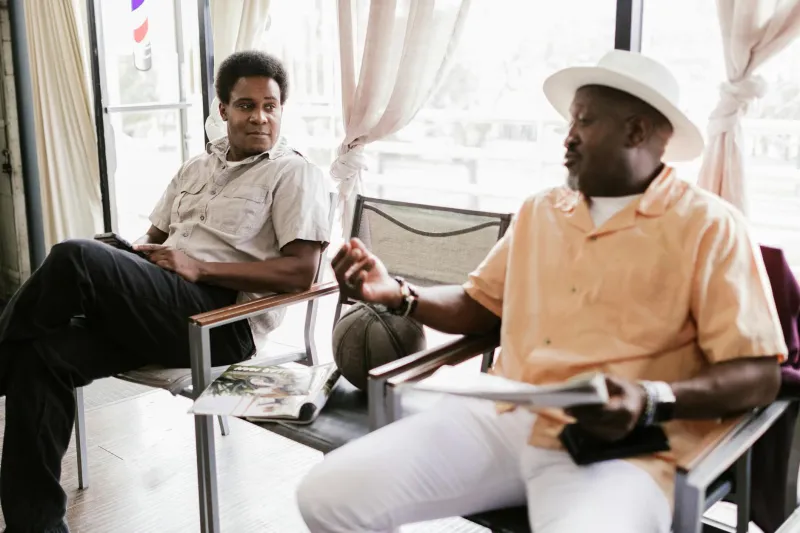
The Barbershop Oracle and the Church Directory
Every community had its information hubs. The barbershop wasn't just where men got haircuts—it was where they learned which contractor had done good work on the Johnsons' kitchen renovation, which doctor was taking new patients, and which car dealership would treat you fairly. Beauty salons served the same function for women, creating networks of tested recommendations that spread through styling sessions and Saturday appointments.
Church directories weren't just lists of congregation members—they were trust networks. When someone needed an accountant, electrician, or babysitter, they'd scan the directory for members whose businesses they could support, knowing that shared faith community provided a layer of accountability no online review could match.
The Corner Store Intelligence Network
Local businesses served as information clearinghouses in ways that seem almost quaint today. Hardware store owners didn't just sell screws and paint—they knew which local contractors bought quality materials and which ones cut corners. Pharmacists knew which doctors prescribed thoughtfully and which ones rushed through appointments. Bank tellers knew which local businesses were thriving and which were struggling.
These relationships took years to build but created incredibly rich information networks. When you needed a specialist, you weren't choosing from hundreds of anonymous online profiles—you were getting curated recommendations from people who'd built trust over decades of daily interactions.
The Yellow Pages: When Discovery Required Effort
Before the internet, finding new services required genuine effort. The Yellow Pages provided basic contact information, but choosing between similar businesses meant asking around, driving by to see their operations, or taking a calculated risk. This friction meant people stuck with businesses that served them well, creating long-term relationships between customers and service providers.
Businesses invested heavily in local reputation because word-of-mouth could make or break them. A plumber who did shoddy work would find his phone stopping ringing as the neighborhood network learned to avoid him. Excellence was rewarded with steady referrals; mediocrity meant slow starvation.
The Algorithm Takes Over
Today, we can instantly access thousands of reviews for any service, compare prices across dozens of providers, and book appointments without speaking to a human. Google's algorithm decides which businesses we see first, Yelp's star ratings influence our choices, and Amazon's recommendations guide our purchases. We've gained convenience and selection but lost the human curation that once filtered our options.
The shift happened gradually, then all at once. First came online directories, then review sites, then mobile apps that could summon services to our doorstep. Each innovation promised better choices, more information, greater convenience. And they delivered—along with information overload, fake reviews, and the peculiar anxiety of having too many options without trusted guides to help navigate them.
What We Gained and What We Lost
Digital platforms democratized access to information and broke down geographical barriers. You could now find highly specialized services, compare prices instantly, and read detailed experiences from dozens of previous customers. Small businesses could reach customers beyond their immediate neighborhoods, and consumers could access services they never would have discovered through personal networks alone.
But the human element—the neighbor who'd stake her reputation on a recommendation—became harder to find. Online reviews can be gamed, manipulated, or written by people whose standards and needs might be completely different from yours. The accountability that came from face-to-face community relationships dissolved into the anonymity of usernames and star ratings.
The Return of Curated Trust
Interestingly, as digital platforms matured, new forms of human curation began emerging. Facebook groups where neighbors share recommendations, Nextdoor apps that recreate digital versions of over-the-fence conversations, and influencers who build followings by offering trusted recommendations. These platforms attempt to recreate the trust networks that digital disruption initially destroyed.
Professional services like Angie's List (now Angi) built businesses around the idea that curated, verified reviews were worth paying for. The success of these platforms suggests that people still crave the human judgment and accountability that characterized pre-digital recommendation networks.
The Neighborhood Knowledge That Algorithms Can't Replicate
Margaret knew that the plumber on Elm Street was excellent with old pipes but struggled with modern fixtures. She knew the dentist on Main Street was gentle with children but rushed with adults. This granular, context-specific knowledge came from years of community observation and couldn't be captured in five-star ratings or algorithmic matching.
Today's digital platforms excel at aggregating large amounts of data but struggle with the nuanced, relationship-based insights that made neighborhood recommendations so valuable. An algorithm might know that a restaurant has 4.3 stars, but it can't tell you that the owner always remembers your mother's dietary restrictions or that Tuesday nights feature the best jazz trio in town.
We've gained the world's information at our fingertips but lost the irreplaceable wisdom of people who knew us, our community, and exactly what we needed. The question isn't whether digital platforms are better or worse—it's whether we can find ways to combine algorithmic efficiency with human insight, global reach with local knowledge, and digital convenience with the accountability that comes from looking your recommender in the eye.