The 4 AM Data Scientist
Every morning before dawn, while America slept, thousands of men in white uniforms were conducting the most sophisticated customer analytics operation the world had ever seen. They didn't call it machine learning or predictive algorithms—they just called it knowing their customers.
The milkman knew that Mrs. Henderson on Maple Street needed an extra quart every Tuesday because her sister visited for bridge club. He knew the Johnsons were cutting back to skim milk because Dr. Miller had mentioned cholesterol at Mr. Johnson's last checkup. He knew the Kowalskis would need extra cream next week because their daughter was coming home from college and she always made her grandmother's pound cake recipe.
This wasn't data harvested from browsing history or purchase patterns analyzed by artificial intelligence. This was human intelligence, applied daily, one doorstep at a time.
The Original Subscription Economy
Long before anyone had heard of Amazon Prime or Blue Apron, the milkman had perfected the subscription model. You didn't order milk—milk simply appeared. The system was so seamless that most families couldn't tell you exactly how much milk they consumed each week, because they never had to think about it.
The milkman's route was a living algorithm, constantly adjusting based on feedback loops that made today's recommendation engines look clunky by comparison. Empty bottles left on the doorstep weren't just containers—they were data points. Two empties instead of one meant the family was drinking more milk. A note tucked under a bottle requesting "extra cream Thursday" was processed instantly, no customer service call required.
The whole system ran on a handshake economy that would make modern subscription services weep with envy. No credit card processing fees, no complicated cancellation procedures, no customer retention specialists. You paid weekly, usually by leaving exact change under an empty bottle, and the service continued until you explicitly said stop.
The Hyper-Local Supply Chain
What we now call "last-mile delivery" was the milkman's entire business model, decades before anyone thought to put that phrase in a PowerPoint presentation. But unlike today's delivery drivers who follow GPS routes optimized by computers, the milkman's route was a work of art, refined over years of experience.
He knew which houses had dogs that needed to be avoided before 6 AM, which customers preferred their milk left in the shade, and which families would leave him coffee and a slice of cake at Christmas. His truck was essentially a mobile convenience store, stocked not just with dairy products but with eggs, butter, bread, and seasonal items like eggnog and ice cream.
The milkman didn't just deliver products—he managed relationships. He knew your family's rhythms better than most relatives did. When the bottles started piling up, he knew you were out of town. When you suddenly switched from whole milk to formula, he knew there was a new baby in the house.
The Death of Personal Service
By the 1960s, this entire ecosystem was crumbling, victim to the rise of supermarkets and suburban car culture. Why wait for the milkman when you could drive to the grocery store and choose from dozens of brands? Why pay premium prices for home delivery when you could buy milk cheaper at the A&P?
The economics were undeniable. Supermarkets offered variety, convenience, and lower prices. The milkman offered personalized service, but apparently that wasn't enough to justify the cost. America chose efficiency over relationships, selection over service, and the milkman quietly disappeared from most neighborhoods by the 1970s.
What nobody anticipated was how much we'd miss what we'd given up.
The Revenge of the Subscription Box
Fast-forward to 2024, and Silicon Valley has spent the last decade trying to recreate what the milkman did naturally. Subscription services now promise to predict your needs, deliver products before you run out, and provide personalized experiences tailored to your lifestyle.
Blue Apron sends you ingredients for meals you might like. Dollar Shave Club delivers razors on a schedule. Amazon's Subscribe & Save tries to anticipate when you'll need more laundry detergent. Grocery delivery services promise to remember your preferences and suggest items based on your purchase history.
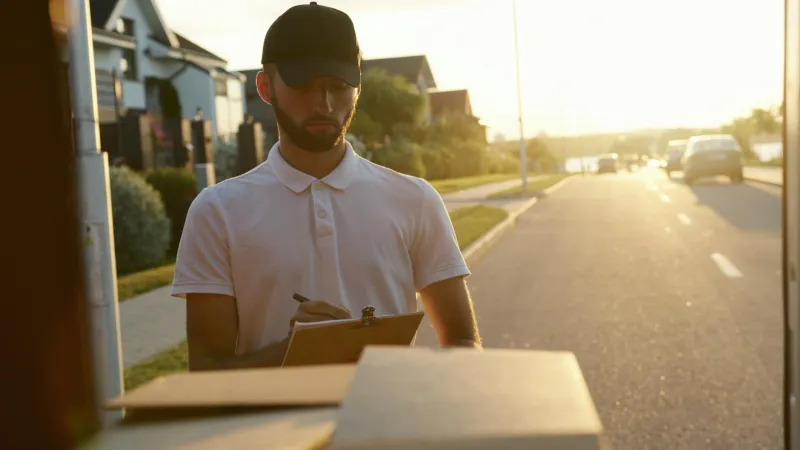
It's all very sophisticated, powered by algorithms that analyze millions of data points to predict consumer behavior. And yet, somehow, it feels less personal than what the milkman provided with nothing more than a clipboard and a good memory.
The Algorithm vs. The Human Touch
The fundamental difference is that the milkman's service was based on actual relationships, not data relationships. He didn't know you were pregnant because your purchase patterns indicated increased calcium intake—he knew because he saw you and noticed. He didn't predict you'd need extra milk for a party because an algorithm flagged unusual consumption patterns—he knew because you left him a note.
Modern subscription services are constantly trying to bridge this gap between data and humanity. They send surveys asking about your preferences. They use machine learning to analyze your behavior. They hire customer success managers to add a human touch to digital interactions.
But there's something irreplaceable about a service provider who actually knows you, not just your purchasing patterns. The milkman didn't need to A/B test different delivery times—he knew you got up early for work and preferred your milk by 5 AM. He didn't need to segment customers into demographic categories—he knew Mrs. Patterson was 78 years old and had trouble carrying heavy bottles, so he left smaller ones.
The New Milkmen
Interestingly, the milkman is making a comeback in some areas, often marketed as a premium, eco-friendly alternative to supermarket shopping. These new services combine the personal touch of the original milkman with modern conveniences like online ordering and text message updates.
But even these modernized versions struggle to recreate the organic relationship that developed between families and their original milkmen. When your milkman was the same person for years or even decades, he became part of the extended family. Today's delivery drivers, no matter how friendly, are usually different people following optimized routes generated by software.
What We're Still Trying to Buy Back
The real lesson of the milkman isn't about dairy delivery—it's about what happens when service becomes truly personal. Before big data and customer analytics, there was just data: the knowledge that came from paying attention to people as individuals, not as segments or personas or user profiles.
Every subscription service today is essentially trying to solve the same problem: How do you provide personalized service at scale? How do you make customers feel known and cared for without actually knowing or caring for them?
The milkman solved this problem by keeping his scale small and his attention focused. He served maybe 200 families, and he knew them all. Modern companies serve millions of customers and try to know them through algorithms.
We gained efficiency, variety, and lower prices when we abandoned the milkman model. But we lost something harder to quantify: the experience of being truly known by the businesses we deal with. In our rush toward convenience, we traded relationships for transactions.
And now, decades later, we're paying premium prices to try to buy back what we gave away for free.