Hitting the Open Road Used to Mean Praying You'd Find Gas Before Dark
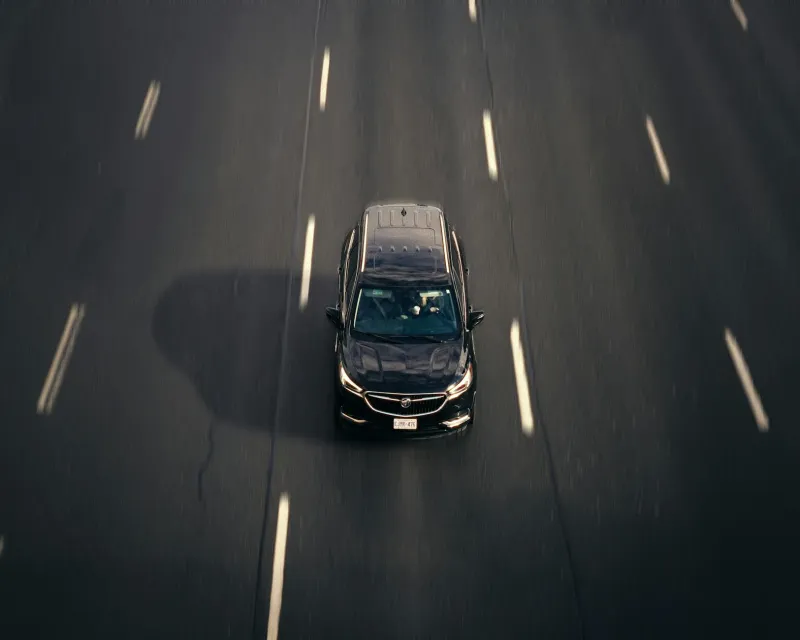
Hitting the Open Road Used to Mean Praying You'd Find Gas Before Dark
There's a version of the American road trip that lives in mythology — wide-open highways, freedom, the romance of the unknown. What that mythology tends to skip over is the part where you spent an afternoon genuinely unsure whether you'd find a gas station before you ran dry on a two-lane stretch of Nevada highway, or pulled into a small town after dark and discovered the only lodging available was a room above a bar with a broken lock.
For drivers in the 1940s and early 1950s, that wasn't a colorful anecdote. That was just Tuesday.
The Roads That Weren't Really Roads
By the time World War II ended and Americans started buying cars in serious numbers, the country's highway infrastructure was, to put it charitably, inconsistent. There were good roads near big cities. There were stretches of Route 66 that had been paved and maintained. And then there were vast swaths of the country where the road quality depended entirely on which county you happened to be crossing, what their budget looked like, and whether it had rained recently.
The American Association of State Highway Officials had been trying to standardize a national route system since the 1920s, and the numbered highway network that emerged from those efforts was real — but standardized numbering didn't mean standardized conditions. A highway could be a four-lane divided road for fifty miles and then narrow to a single paved lane, then gravel, then something you'd generously call a track, all without changing its designation on your map.
Maps themselves were part of the problem. Road atlases of the era were notoriously unreliable. A road that appeared on paper might have washed out, been rerouted, or simply not been there in any meaningful sense. Travelers who drove cross-country in the late 1940s often describe the experience as something between navigation and improvisation.
The Fuel Problem
Gas stations existed, of course. But their distribution across the American landscape was uneven in ways that modern drivers, accustomed to a station every few miles on any major route, would find genuinely alarming.
In rural stretches of the West, Southwest, and parts of the South, stations were few and the distances between them were long. Experienced road travelers of the era carried spare fuel cans as a matter of routine — not as a precaution but as a necessity. Running dry wasn't a freak occurrence. It was a known risk that required active management.
And even when you found a station, there was no guarantee it would be open. Independent operators kept their own hours. A station that served a farming community might close at 6 p.m. because that's when the farmer who owned it went home for dinner. If you arrived at 6:15, you waited until morning or you pushed on and hoped.
The Lodging Lottery
Accommodations were their own adventure. The motel as a concept was still relatively young — the word itself only entered common usage in the 1920s — and the industry had no meaningful standardization. Quality varied wildly. A motor court in one town might be clean, comfortable, and fairly priced. The one fifty miles down the road might be a collection of cabins that hadn't seen maintenance since Prohibition.
For Black travelers, the situation was far worse than mere inconsistency. Across much of the South — and in plenty of the North — hotels, motels, and motor courts simply refused Black guests. The Green Book, a travel guide published annually from 1936 to 1966, existed specifically to help Black Americans navigate a country where the open road was a minefield of potential humiliation and danger. The freedom of the road trip was not equally distributed.
Even for white travelers, advance reservations were often impossible — many small motor courts didn't have phones, and those that did weren't set up for long-distance booking. You drove until you were tired, pulled into whatever town you'd reached, and hoped something was available. On holiday weekends, hope wasn't always enough.
What 1956 Changed
President Eisenhower signed the Federal Aid Highway Act in June of 1956, authorizing 41,000 miles of limited-access, divided highway to be built across the United States. Eisenhower had been pushing for something like this since the 1930s, partly inspired by Germany's autobahn network and partly by the military logistics nightmare of moving equipment across American roads during World War II.
The interstates that followed over the next two decades were a different kind of road entirely. Consistent surfaces. Controlled access, meaning no at-grade intersections, no traffic lights, no farm equipment pulling out from a side road. Grades and curves engineered to predictable standards. And crucially, the infrastructure that followed — fuel stations, rest stops, food, lodging — was distributed along these routes with the logic of the system in mind.
Holiday Inn had opened its first location in Memphis in 1952, and the brand's expansion tracked almost perfectly with the interstate buildout. By the mid-1960s, the familiar green sign was a reliable landmark along major routes across the country. You knew what you were getting before you pulled in. That predictability — boring as it sounds — was genuinely revolutionary.
The Trade-Off Nobody Fully Tallied
The interstates made cross-country travel faster, safer, and infinitely more predictable. They also bypassed thousands of small towns that had built their economies around the travelers who once had no choice but to stop. Some of those towns found ways to adapt. Many didn't. Drive through certain stretches of the rural Midwest or Southwest today and you'll pass through places that were thriving roadside communities in 1950 and are now largely empty, the old motor courts and diners still visible from the highway that no longer runs through them.
The romance of the old road — the uncertainty, the discovery, the sense that you genuinely didn't know what the next hundred miles would bring — went with it. Modern road trippers can map every fuel stop, pre-book every room, and arrive knowing exactly what to expect. That's a remarkable thing.
It's also, depending on your disposition, a little bit of a loss.